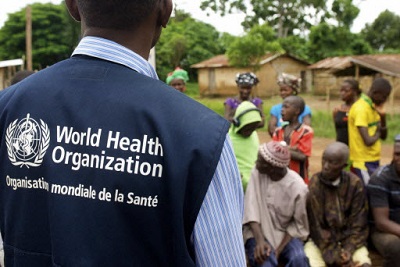
The World Health Organization has made some mind-boggling predictions about Nigeria which will see some diseases hold sway in the country.
Nigerians should brace for adverse weather conditions such as heavy rainfall and flooding, and diseases like cholera this year, according to Guardian News.
This is against the backdrop of predictions by the World Health Organisation (WHO) that rainfall patterns will be unusually heavy and lead to serious flooding and major outbreaks of malaria, cholera and Rift Valley Fever.
Rift Valley Fever (RVF) is a viral zoonosis that primarily affects animals but also has the capacity to infect humans. The disease also results in significant economic losses due to death and abortion among RVF-infected livestock.
According to WHO, El Niño which is a warming of the central to eastern tropical Pacific Ocean, affects rainfall patterns and temperatures most intensely in the tropical regions of Africa, Asia-Pacific, and Latin America, which are particularly vulnerable to natural hazards.
Typically, some places receive much more rain than normal while others receive much less.
According to a new report by WHO, severe drought, flooding, heavy rains and temperature rises are all known effects of El Niño that can lead to food insecurity and malnutrition, disease outbreaks, acute water shortages, and disruption of health services. The health implications are usually more intense in developing countries with fewer capacities to reduce the health consequences.
The WHO report reads: “The current El Niño from 2015 to 2016 is predicted to be the worst in recent years, and comparable to the El Niño in 1997-1998, which had major health consequences worldwide. In Eastern Africa, as a result of the El Niño in 1997-1998, WHO found that rainfall patterns were unusually heavy and led to serious flooding and major outbreaks of malaria, cholera and Rift Valley Fever.”
 Home
Home