Home Contact Us Tip Us: [email protected]







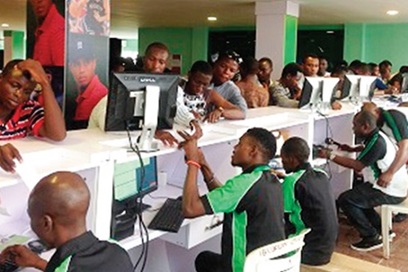
More than 60 million Nigerians place bets online every day, and this phenomenon has already become part of the country's daily life. Why has online gambling gained popularity so quickly, and what threats are hidden behind this mass fascination? The turnover of the online gambling market in Nigeria has reached an impressive $3.87 billion, and its rapid growth is closely linked to economic difficulties and the search for easy ways to earn money.
In recent years, online gambling in Nigeria has grown several times over, and now the number of participants exceeds 60 million people. The emergence and development of digital platforms, as well as the widespread adoption of mobile payments, have made betting accessible to most of the country's residents. The mass involvement of the population is shaping a new culture where the pursuit of quick money is becoming the norm.
Modern smartphones and online platforms allow people to place bets literally from anywhere in the country, which radically changes everyday habits. For many, betting becomes a way to cope with such problems as unemployment, inflation, and declining purchasing power. The ease of access contributes to the rapid spread of gambling not only among adults but also among young people.
In such a situation, it is not surprising that short mobile games are quickly entering the market, where a round lasts just a few seconds and timing is everything. Therefore, the audience develops its own hits, which are discussed in chats and tried on friends’ recommendations.
On thematic forums dedicated to gambling in Nigeria, we found information that most new players appear due to the spread of sites with casino game reviews. It was also mentioned there that among users, the most popular is the aviatrix game, presented by a resource that selects online casinos and bonuses for playing in them. Games with such fast mechanics, as well as the presence of bonus promotions, attract Nigerian players with their accessibility.
This case clearly shows why mobile gambling is so easily scalable: a person only needs a phone and a couple of minutes to figure out the mechanics.
The rapid growth of online gambling leads to noticeable social consequences, including:
At universities, students are increasingly spending their tuition money on bets, hoping to win it back. Parents express concern about how easily children can access gaming platforms, despite official restrictions. In real stories of people who have lost their salaries and savings, there is a clear link between betting and the growth of debt obligations. In addition, gambling addiction negatively affects the education, health, and psycho-emotional state of players.
A recent Supreme Court decision challenged the unified federal approach to gambling regulation, transferring authority to individual states. Now operators are forced to obtain licenses in each region, which causes confusion and complicates market oversight. Attempts to adopt a single central law face legal and political obstacles, and disagreements between federal and regional authorities hinder the creation of transparent rules. Questions about who should be responsible for regulating the market remain contentious and unresolved.
Industry supporters argue that online gambling creates jobs, brings in taxes, and attracts investment. Public organizations, on the other hand, emphasize the risks for young people, the growth of addiction, and the destruction of families. There are gaps in the arguments of both sides: bookmakers often exaggerate the economic benefits, while public interest advocates do not always offer effective protection methods. Control over minors remains a weak spot, and existing measures have not yet produced tangible results.
Creating a transparent and effective regulatory system is becoming a key task for the government and business. Steps are being taken to protect vulnerable groups:
A comprehensive approach that combines economic benefit and social responsibility can reduce the threats associated with the rapid growth of the market and preserve its benefits for the country. Only in this way can a balance be found between the pursuit of profit and concern for the well-being of society.