Home Contact Us Tip Us: [email protected]







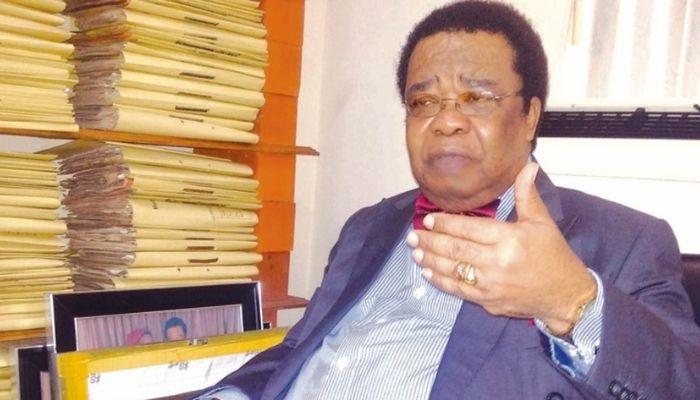
Former Minister of External Affairs Bolaji Akinyemi has stated that Nigeria would have taken a different path if former Head of State Gen. Murtala Muhammed had not been ass@ssinated.
Muhammed was Nigeria’s Head of State from July 29, 1975, until his ass@ssination in Lagos on February 13, 1976.
Speaking at a strategic policy workshop organised by the Murtala Muhammed Foundation, headed by Aisha Muhammed-Oyebode, and the Nigerian Institute of International Affairs, led by Eghosa Osaghae, Akinyemi said the history of not only Nigeria but also his personal life would have been different if Muhammed had not been k!lled.
The workshop, with the theme “Has Africa come of age? Murtala Muhammed’s pan-African vision 50 years after,” was held on Thursday at the NIIA auditorium, Victoria Island, Lagos.
Akinyemi said, “Dr. Aisha Muhammed-Oyebode said she misses her father very, extremely personally. Let me assure her that I also miss him in a very personal way.
“I am sure that if the General had not been ass@ssinated, it is not only the history of Nigeria that would have been different; I even think that my own personal life would have been different.”
Akinyemi recalled that Muhammed was an intellectual who spoke publicly and analysed issues in the polity, adding that he would not hesitate to disagree with views he was not comfortable with.
He noted that Nigeria needs people like Muhammed, leaders in influential positions who would not hesitate to publicly voice their stance on issues, even if it ran against the majority view.
Speaking further on Muhammed’s personality, he said, “I had never met him, but one was aware of the positions he took and continued to take publicly on issues. When military officers took positions on issues, General Muhammed would always be found in the pages of newspapers, arguing one position or the other.
“We once held a conference and invited military officers. What struck me was an episode involving General Murtala Muhammed. We were discussing the Middle East, and at that time, I would say the entire university community in Nigeria was on the side of the Palestinians.
“We were anti-Israel. We thought the Israelis were behaving rather badly. It was time for afternoon prayers, and General Muhammed got up to pray. As he was walking out, when he got to the door, he stopped, turned around and said, ‘Why are we discussing this? Bloody waste of time.’ He then went into the corridor, spread the prayer mat, said his prayers, and came back in.
“That struck me because, under normal circumstances, we expected a northern military officer to be anti-Israel and pro-Palestinian, and expected Nigeria to take such a position. But he was exactly the opposite. That was my exposure to what General Muhammed stood for. He was ready to disagree with authority, ready to disagree even with those who invited him and their position, and he did not mind expressing it. And I thought, this is what we need in Nigeria.”
He noted that Muhammed was a Head of State who instilled pride in Nigerians and commanded respect in continental and international diplomatic circles.
“For some reason, people have not forgotten that we once had, in this country, a Head of State who brought out pride in Nigerians. They knew what he stood for. He was not a Head of State who avoided taking a stance on issues, and Nigerians knew what was expected of them. If he disagreed with you, he would give reasons for his position,” Akinyemi said.