Home Contact Us Tip Us: [email protected]





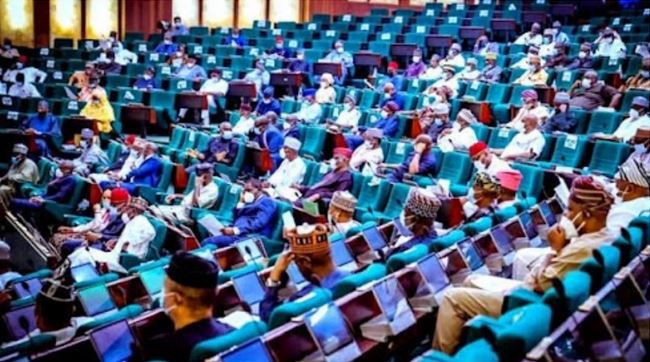
The House of Representatives has urged the Federal Government to cancel all outstanding COVID-19 survival loans issued to vulnerable households and small businesses.
Lawmakers also want the SME component of the loan restructured.
The House asked the Federal Government, the Central Bank of Nigeria (CBN), NIRSAL Microfinance Bank, and the Ministry of Finance to stop all deductions from beneficiaries’ accounts.
This followed a motion moved on Wednesday by Hon. Musa Saidu Abdullahi from Niger State.
Abdullahi explained that the Federal Government created the COVID-19 Targeted Credit Facility during the pandemic and released N419.42bn to support households and small businesses affected by the lockdown.
He said the programme reached 792,936 beneficiaries, including 674,972 households and 117,964 small businesses. Women made up 45% of those supported.
He added that the loan programme helped create or sustain about 1.58 million jobs during the pandemic. But as of September 2023, N261.07bn, about 62% of the loans was still unpaid.
A total of N378.03bn remained outstanding, showing the difficulty many families and small businesses face.
Abdullahi warned that new CBN surveys show loan defaults are rising because of high inflation, food insecurity, reduced income, and business closures.
He argued that repayment is unrealistic for many people.
He noted that: “The COVID-19 loan was a survival support, not a normal business loan. Many households used the money for food, rent, healthcare, and school fees during the lockdown.”
The lawmaker also said the government has shown similar leniency before, especially in the Anchor Borrowers Programme, where many loans were restructured or partly waived.
He pointed out that other countries, including the United States, Canada, Germany, South Africa, and India also waived parts of their COVID-19 relief loans, understanding the unusual hardship caused by the pandemic.
Abdullahi expressed concern that continued automatic deductions are worsening the suffering of vulnerable Nigerians.
According to him, harsh recoveries “risk collapsing small businesses, increasing unemployment, and causing social instability.”
He praised the government and financial institutions for creating the programme in the first place, saying it helped many Nigerians survive during a difficult period.