Home Contact Us Tip Us: [email protected]








Political economist and public affairs analyst Prof. Pat Utomi has expressed renewed concern over Nigeria’s worsening road infrastructure after a trip from Lagos to Asaba turned into a grueling 15-hour ordeal, even without any vehicle breakdown.
Utomi shared the experience on his X (formerly Twitter), late Monday, describing what should have been a routine intercity trip as a reflection of deep-rooted infrastructure decay, poor governance and misplaced national priorities.
“My car left Lagos at 5am. It has just arrived Asaba after 8pm. It had no breakdowns,” Utomi wrote. “It made Benin at 10.30. That was a three-hour drive in the 80s. But the real news is that it took six hours to cross Benin.”
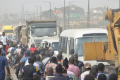
According to him, the prolonged delay was caused not by traffic accidents or mechanical faults, but by a toxic mix of crumbling roads, congestion and alleged extortion by security operatives.
“From police trying to extort money to terribly bad roads, Detty December got dirty,” he added.
Utomi’s account has reignited public outrage over the state of federal highways across the country, particularly major economic corridors such as the Lagos–Benin–Asaba route, which links the South-West, South-South and South-East regions.
Road users and transport operators have repeatedly complained that highways once traversed in hours now take an entire day, increasing the cost of transportation, damaging vehicles and endangering lives.
Critics argue that the situation exposes a contradiction in government priorities, as trillions of naira are earmarked for new flagship projects while existing infrastructure collapses.
While the Nigerian government is already committing trillions of naira to the construction of a new coastal highway, many Nigerians say strategic roads that support commerce, agriculture and interregional mobility have been left to decay.
“It is difficult to justify new mega-projects when the arteries of the economy are completely broken,” said a logistics operator in Benin, who asked not to be named. “From Lagos to Onitsha, trucks are stuck, goods are delayed, and costs are passed to consumers.”
Beyond roads, Utomi’s comment has also drawn attention to the near-collapse of Nigeria’s railway system, which many believe should serve as an alternative to long-distance road travel.
Despite billions invested in rail projects over the years, frequent breakdowns, limited coverage and safety concerns have reduced confidence in rail transport. The result is excessive pressure on roads that were never designed to carry today’s traffic volume.
Policy analysts say the consequences are severe: higher inflation driven by transport costs, reduced productivity, increased road accidents and a growing sense of frustration among citizens.
“Road infrastructure is not just about convenience; it is about economic survival,” said a development economist in Lagos. “When a journey that once took three hours now takes 15, it signals systemic failure.”