Home Contact Us Tip Us: [email protected]







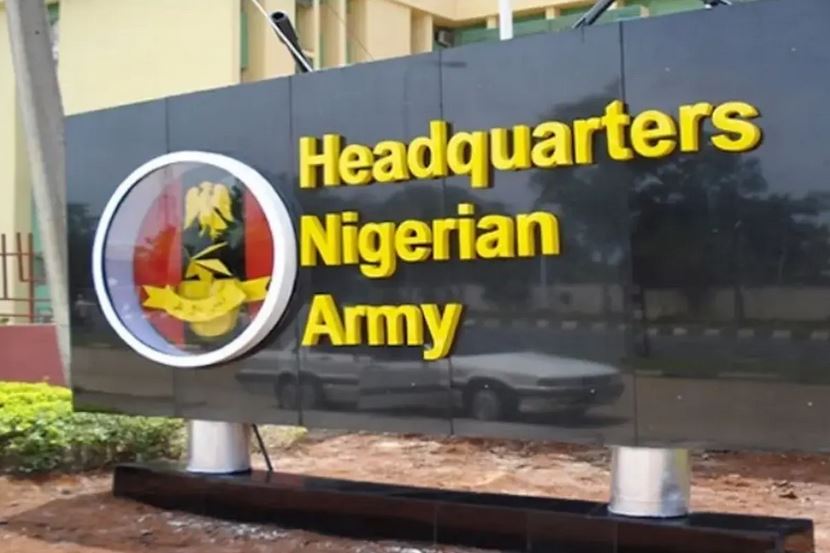
The Nigerian military is tracking Boko Haram and Islamic State West Africa Province fighters who are fleeing their hideouts following recent U.S. airstrikes, according to The PUNCH.
U.S. President Donald Trump announced on Christmas Day that the American military carried out lethal strikes against Islamic State targets in northwestern Nigeria.
The Federal Government confirmed the operation, describing it as part of ongoing counterterrorism cooperation.
Following the strikes, there were reports of movements by armed groups into other areas.
The Chairman of the Traditional Council in Gwer West Local Government Area of Benue State, Daniel Abomtse, according to a report by Sunday PUNCH, raised concern over what he described as an influx of armed herders into some communities after the attack.
Community leaders in Tangaza, Gudu and parts of Illela in Sokoto State also said that there had been noticeable dislocation and movement by the armed groups.
Some of them, who spoke on condition of anonymity, said suspected bandits were seen moving in smaller groups towards remote forest corridors, while others were believed to be attempting to cross into neighbouring border communities.
However, senior military officials, who spoke with The Punch on Monday, said the military was tracking the movement of the terrorists.
“We know they are fleeing. We have information on that and we are working on it. They are being monitored and their movements are being tracked,” one official said.
Another official said intelligence, surveillance and reconnaissance operations were ongoing to monitor the situation.
The official said, “Is it possible for us not to know they are fleeing. We have the information and we are conducting ISR to track them. “
Meanwhile, retired senior military officers have expressed differing opinions on the possible deployment of US troops to Nigeria.
The Minister of Foreign Affairs,Yusuf Tuggar recently said the Ministry of Defence would advise the government on possible next steps when asked on CNN whether Nigeria might consider allowing US soldiers into the country.
A former senior officer, Brigadier-General Peter Aro (retd.), said he does not support the deployment of US soldiers on Nigerian soil, warning that such a move have serious legal, diplomatic and social implications.
He said foreign troops could only be deployed under a formal defence pact approved at the highest level of government, adding that the consequences would be “profound.”
According to him, Nigeria’s fragile internal cohesion could be further strained if foreign military personnel were stationed in the country.
He said, “I strongly do not support the deployment of US soldiers on Nigerian soil. This is a serious matter that must be approached with utmost caution. From a legal and diplomatic standpoint, foreign boots on the ground can only follow a formal Defence Pact approved at the highest levels of government, and even then, the consequences would be profound.
“At a time when our country is already grappling with fragile national cohesion, the presence of foreign troops could deepen internal mistrust, fuel insurgent propaganda, and exacerbate existing regional and religious sensitivities. Notably, even some northern elites and intellectuals: judging by reactions on social media, are uncomfortable with this intervention, and that discomfort speaks volumes.’’
Aro argued that increased US involvement did not require American military deployment, saying Nigeria already had sufficient ground forces, including the armed forces, police mobile units and civil defence personnel.
He said the gaps in counter-insurgency operations were in air power, surveillance and precision strike capability, areas in which the US could support Nigeria without replacing local troops on the ground.
He added that maintaining Nigerian control of land operations was important for legitimacy and long-term stability.
However, another retired officer, Brigadier General Bashir Adewinbi (retd.), supported closer security cooperation with the US, saying collaboration among countries was a normal practice.
He said the National Security Adviser’s recent visit to the US was part of ongoing cooperation and linked the Christmas Day strike to a joint Nigeria-US effort.
Adewinbi said that if the deployment of US soldiers was considered necessary to improve security, he would support it provided it followed due diplomatic processes and clearly defined terms of engagement.
“You can remember NSA went to America because of this. The strike conducted on Christmas Day is a joint Nigeria-USA exercise. Whatever it is, they are effective, efficient, and they have achieved a lot within a short period of time.
“On deployment of US soldiers to Nigeria, if it is a way to solve our problem, if there is need, it is collaboration.
“It happens between countries and international communities. Yes, collaboration is the answer to the problem of the world today.”
He further pointed out that such a collaboration would not weaken the morale of Nigerian troops, saying international partnerships were aimed at achieving results.
He said Nigeria should be open to working with any country, if it would help address insecurity.
“There is nothing wrong in collaboration. If they come, they must have stated the terms and conditions and what they are coming to do. It cannot dampen morale.”
Also commenting, Major General Dayo Olukoju (retd.), said , “When we move forward, we will tell you whether the move is right or not.
At this instance, strategic mistakes cannot be made.”
A former spokesman for the Nigerian Air Force, Group Captain Sadique Shehu (retd.), criticised suggestions that United States soldiers should be deployed to Nigeria to assist in the ongoing war against terrorism.
Shehu said it was disappointing that such an idea was being considered, noting that as a former military officer, he found the development worrying.
He said Nigeria could seek assistance and technology support from foreign partners, but should not depend on foreign soldiers to fight on its soil.
He said, “It is very disappointing that some are even thinking of that. As a military man, I am ashamed. How did we arrive here? We agree we don’t have their technology, but if you are talking about their soldiers coming to fight for us, the country is finished then.”
He, however, said the likelihood of the US deploying large numbers of troops in Nigeria, as seen in Iraq or Afghanistan, was low. According to him, what was more likely was the deployment of small advisory teams, something he said had been ongoing.
Shehu also commented on the reported US strikes in Sokoto, saying there was no confirmed information yet on whether any terrorists were killed during the operation.
He said, “As of now, there’s no evidence that any terrorists have been killed. All we know now is that there was an attack, but that they have killed anybody, we don’t know.”
The retired officer added that Nigeria should clearly define the terms of any security assistance received from foreign partners and ensure that Nigerian authorities communicate directly with citizens rather than relying on statements from foreign governments.
“What arrangement did they make? When I say I’m inviting you to my house to repair my roof, I must tell you that it’s the roof in my parlour, not the roof in my bedroom.
“So, you come and see — this is what countries do. And I’m afraid, this is my personal opinion, I don’t think we did that in Nigeria. When an attack happens, it shouldn’t be Trump talking to Nigerians. This is what I think: it should be Nigerians talking to Nigerians. We should not be listening only to what Washington says.
“After this attack, we first heard from Trump. Is that right? It shouldn’t be like that. Yes, we need their help, and we are happy they are helping. But you must set out the rules and regulations for how that help is going to be provided.”
Meanwhile, a United States congressman, Riley Moore, has defended President Donald Trump, stating that the recent US airstrikes in Nigeria were intended to bring peace and security, not war, to the country.
Moore, in a post via X on Monday, said the strikes against ISIS on Christmas Day were intended to protect thousands of Christians facing severe violence and threats to their lives.
He added that the joint operation has given hope to Christians in Nigeria.
“President Trump is not trying to bring war to Nigeria; he’s bringing peace and security to Nigeria and to the thousands of Christians who face horrific violence and death.
“The strikes against ISIS on Christmas, in coordination with the Nigerian government, have given hope to the Christians in Nigeria,” Moore declared.