Home Contact Us Tip Us: [email protected]







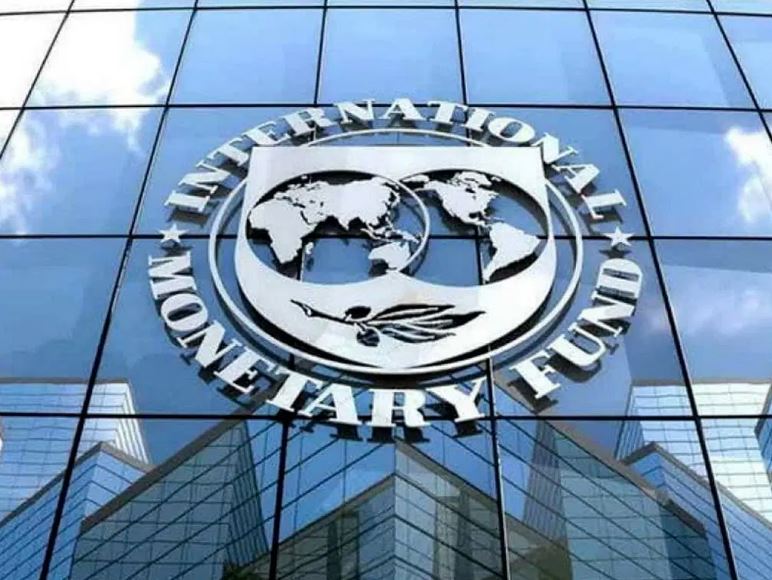
The International Monetary Fund has raised Nigeria’s 2026 economic growth projection to 4.4 percent, attributing the upgrade to stronger macroeconomic conditions and continued reform efforts.
The revised projection was contained in the IMF’s January 2026 World Economic Outlook Update, titled “Global Economy: Steady amid Divergent Forces.”
The Fund expects Nigeria’s economy to follow a steady expansion path, growing from 4.1 per cent in 2024 to 4.2 per cent in 2025, before accelerating to 4.4 per cent in 2026. The new figure represents a 0.2 percentage point upward revision from the IMF’s October 2025 forecast.
According to the Fund, Nigeria’s stronger outlook aligns with broader growth trends across sub-Saharan Africa, where economic expansion is projected to reach 4.6 per cent in both 2026 and 2027. The IMF attributed the regional improvement to ongoing macroeconomic stabilisation and reform efforts across key economies.
At the global level, the IMF projected economic growth of 3.3 per cent in 2026, noting that the world economy remains resilient despite persistent uncertainties. The Fund said the outlook reflects a balance of opposing forces, with the impact of changing trade policies being offset by increased investment in technology and artificial intelligence.
For Nigeria, the IMF identified energy prices as a key factor influencing the 2026 outlook. It projected that energy commodity prices could decline by about seven per cent in 2026, largely due to weak global demand. However, the report noted that oil prices continue to find support from coordinated production management by OPEC+ and crude stockpiling by China, helping to limit downside pressures.
Despite the improved forecast, the IMF warned that risks to the outlook remain tilted to the downside. These include escalating geopolitical tensions in the Middle East and Ukraine with possible spillovers to global supply chains, renewed trade tensions and protectionist policies that could heighten uncertainty, and high public debt levels and fiscal deficits that may push long-term interest rates higher.
To sustain growth, the IMF urged Nigerian authorities to rebuild fiscal buffers and press ahead with structural reforms. It stressed the importance of central bank independence for maintaining macroeconomic stability, particularly in a volatile global environment. The Fund also cautioned that any discretionary fiscal support should be carefully targeted and time-bound to ensure it remains temporary.
The IMF concluded that Nigeria’s ability to achieve its 2026 growth target will depend on the consistent implementation of reforms and the country’s capacity to withstand domestic and external shocks as the global economy continues to adjust.