Home Contact Us Tip Us: [email protected]



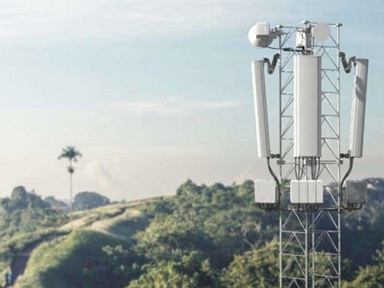
At the beginning of 2026, an obvious question arises for 177 million subscribers in Nigeria: will they finally be able to get stable and fast connectivity that matches their expectations and expenses. The country's telecommunications sector has long become an integral part of the economy, business, and everyday life. Every day, millions of people make payments, send messages, watch videos, and work online, fully relying on the quality of mobile and internet connectivity. It is not surprising that the main expectations of users for this year are high reliability, stable speed, and availability of services for all regions of the country.
The past year 2025 brought the industry notable successes, but at the same time revealed serious contradictions. Among the achievements, the following indicators stand out in particular:
However, even against the backdrop of these records, 2025 was remembered for a series of serious outages and disruptions. The growth in the number of users and the improvement of technical indicators were accompanied by regular disconnections and a decline in connection quality.
Problems in telecommunications infrastructure affected almost every user and had an impact on key sectors of the economy. The main challenges for the industry include:
These problems lead to disruptions in banking operations, delays in medical services, interruptions in educational online platforms, and even hinder the work of security services. For example, in 2025, the industry faced 19,384 cases of fiber optic line breaks, which directly affected internet availability for millions of people. For businesses, this meant downtime, for families—the inability to contact loved ones, and for students—the loss of access to online lessons.
For some, disruptions in working with the global network not only block access to information but also directly affect their well-being. On Reddit, one user from Nigeria shared a story about how he almost lost the opportunity to use a promo code in an online casino, which was about to expire due to the lack of internet. A fan of card games, having found a site with best Andar Bahar casinos online, copied a promo code from there and activated it. At that moment, the network quality deteriorated, and after a while, the internet disappeared completely. Technicians restored access to the network just as the bonus was about to expire, but the user accidentally forgot about it. Therefore, he went to Reddit to find out if it was possible to activate it again. Forum users shared various tips with him, but the Nigerian did not respond—perhaps he faced the same problem again.
The response to growing challenges has been large-scale projects and investment initiatives. Among them, the following stand out:
These measures can be compared to creating a new "circulatory system" for the digital economy, where each line and tower is an artery through which information flows, necessary for the life of modern society.
Nigeria's technological landscape is changing rapidly. As of today:
The transition to 4G and 5G is important not only for video download speeds or fast message sending. The development of online education, telemedicine, electronic government services, and even remote work depends on this. The mass adoption of new standards will open access to digital opportunities for millions of the country's residents.
User expectations often outpace the real pace of change. Operators and authorities are investing in infrastructure, but face a number of weak points:
The question arises: what will change for the ordinary user if the infrastructure becomes more reliable and new technologies become widespread? Will the internet really become accessible and stable regardless of place of residence and chosen operator?
The telecommunications industry faces large-scale challenges, but the achievements of recent years inspire optimism. The growth of internet penetration, the increase in the number of smartphone users, and investments in infrastructure create a foundation for a future leap in connection quality. However, a real breakthrough will require even more effort to defeat vandalism, accelerate the introduction of new technologies, and ensure equal access to digital services for all citizens.
Millions of Nigerians still hope that 2026 will bring long-awaited changes. For a country where connectivity has become an integral part of life, quality internet is not just a convenience, but the key to development, education, and new opportunities for every person.