Home Contact Us Tip Us: [email protected]






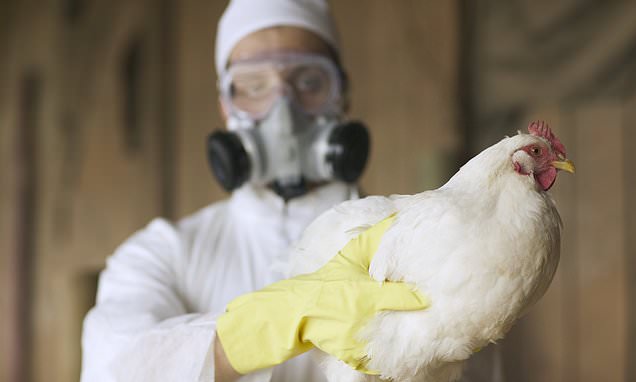
(The Bird. Photo by Daily Mail)
A lone suspected bird flu case has raised alarm that a deadly strain, blamed for killing millions of animals across the world, could now have made its way into Australia.
Agriculture Minister Julie Collins confirmed that a migratory wild bird had tested as a suspected case of the disease in Western Australia.
However, she noted it was still too early to confirm whether it was the H5N1 strain that has devastated bird populations worldwide, with additional test results expected on Saturday.
Mainland Australia remains the only continent that has not yet recorded the deadly strain.
According to Collins, there is currently no sign of mass animal deaths, nor any indication that poultry have been infected.
She said that if the case is confirmed as H5 bird flu, it would be a sobering development, though not entirely unexpected given how widely the virus has already spread internationally.
The H5N1 strain was first detected on Australian territory in October, on the remote World Heritage-listed Heard Island, located roughly 4,000km southwest of Perth.
Researchers who travelled to the island estimated that around 13,359 southern elephant seal pups had succumbed to the disease, out of a total population of 17,364 representing more than three-quarters of the population.
Collins maintained that the strain reaching the mainland was always likely to happen eventually, and said authorities had been making preparations in anticipation of this.
She sought to ease concerns that the outbreak could severely impact Australian farmers, who are already struggling with a fuel crisis stemming from conflict in the Middle East.
She emphasised that this involves just one bird and a single suspected case, stating Australia is as well-prepared as any nation could be.
She pointed to early government investment in preparedness measures, saying that work was now paying off and that authorities had identified the case early if it is confirmed.
Collins added that the risk to human health would be extremely minimal.
Representatives from state and territory governments, along with industry experts, were due to meet on Friday afternoon to discuss response planning.