Home Contact Us Tip Us: [email protected]





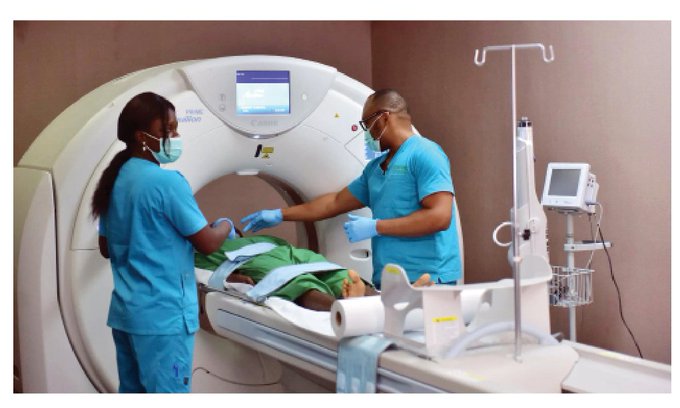
(Cancer Treatment. Photo by Leadership News)
The Federal Ministry of Health and Social Welfare has received Project Strengthening Radiation Therapy Workforce in Nigeria (STRAWN), a supervised workforce-development initiative designed to strengthen the country's radiotherapy pipeline and enhance the safety and quality of cancer treatment delivery across the nation.
The project was formally presented to the ministry in Abuja by the University of Nigeria Teaching Hospital (UNTH), Enugu, and OncoClinics Africa, with technical support from Siemens Healthineers.
The initiative draws support from key professional and regulatory bodies, including the Radiographers Registration Board of Nigeria (RRBN), the Association of Clinical and Radiation Oncologists in Nigeria (ARCON), the National Institute for Cancer Research and Treatment (NICRAT), the Nigerian Association of Medical Physicists (NAMP) and the National Cancer Control Programme Technical Working Group (NCCP TWG).
Stakeholders noted that Nigeria currently has 80 licensed radiotherapy professionals to serve approximately 12 operational linear accelerators nationwide.
They characterized this shortfall as a significant constraint on the country's recent investments in cancer treatment infrastructure, arguing that treatment machines cannot deliver safe care without an adequate number of trained personnel to operate them.
STRAWN is built around two training routes. The first offers an advanced programme for already-certified therapy radiographers seeking additional specialisation.
The second is a six-month, competency-based bridge programme designed for newly graduated radiography professionals.
The curriculum combines classroom learning with supervised clinical work, skills documentation, competency assessments, patient communication training, and exposure to quality assurance protocols.
Organisers made clear that STRAWN does not replace the statutory certification requirements and does not authorize participants to work independently as therapy radiographers.
Rather, the programme is intended to enhance clinical readiness and facilitate a smoother transition into Nigeria's formal certification pathway.
Nwamaka Lasebikan, the programme's principal investigator, described STRAWN as a "governed bridge" into the regulated workforce pipeline rather than a shortcut.
She explained that while Nigeria was investing in radiotherapy infrastructure, the machines themselves do not treat patients without skilled personnel.
She stressed the need for a competent, supervised, quality-aware workforce capable of supporting safe service delivery today while progressing toward full certification tomorrow.
Zahi El Khatib, Chief Executive of OncoClinics Africa, said the initiative tackles one of cancer care's most critical bottlenecks in Nigeria.
Based on the organization's experience, he noted that infrastructure, technology and clinical excellence must advance together, and described the workforce gap as one of the most pressing constraints in delivering cancer care in the country.
Obinna Onodugo, Chief Medical Director of UNTH Enugu, said the institution's participation reflects its role as a national centre for oncology training, research and service provision, adding that STRAWN exemplifies the kind of collaboration required to build sustainable local capacity.
The Minister of State for Health and Social Welfare, Iziaq Adekunle Salako, praised the initiative as timely and consistent with Nigeria's cancer control goals, though he urged stakeholders to put sustainability measures in place to help curtail the loss of trained personnel to migration.
Following the meeting, participants agreed on a four-point plan: formal designation of STRAWN as a supervised national pilot programme; development of scope-of-practice and supervision guidelines by the RRBN; placement of the initiative under the NCCP TWG Workforce Development Subcommittee; and phased expansion of training capacity using existing institutions as anchor centres.
Malachy Ejimofor, Director of the RRBN's training institute, confirmed the board's continued backing while stressing the importance of curriculum consistency, structured supervision and transparent progression pathways.
Biyi Olusegun, Vice President of ARCON, also underscored the urgency of expanding the radiotherapy workforce, noting that oncologists depend heavily on trained radiotherapy specialists to respond to rising patient numbers.
Organisers said the longer-term objective is to expand STRAWN nationally, starting with UNTH and OncoClinics Africa before rolling out to training hubs across Nigeria's geopolitical regions, in accordance with the National Cancer Control Plan.