Home Contact Us Tip Us: [email protected]







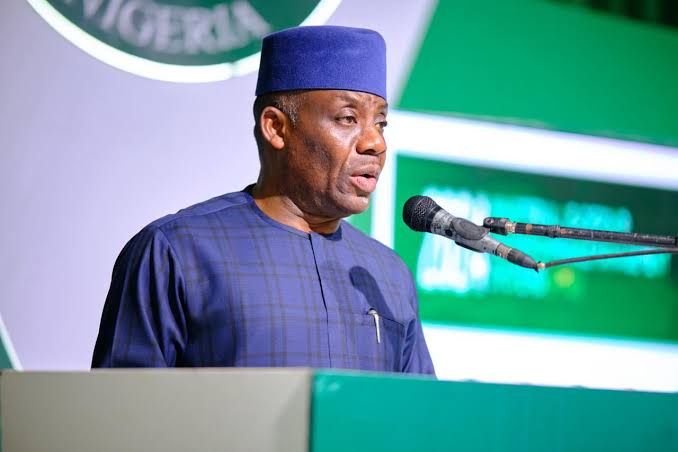
(Minister of Education, Tunji Alausa. Photo by Punch News)
The Nigerian government plans to use computers and the internet to help more children go to school and fix the shortage of trained teachers.
The plan is called the National Education Technology Strategy.
It will bring 26 existing government programmes under one digital framework covering teaching, learning, school management, skills training and education financing.
Adebayo Onigbanjo, National Coordinator of the Special Programmes Operation and Implementation Unit at the Federal Ministry of Education, announced the plan at a press briefing in Abuja on Monday.
One part, the National Education Verification and Identification initiative, will map children and give each one a unique Learner Identification Number.
This will help officials find children who are out of school and direct help to them.
The data will also be used to design programmes for girls, out of school children and those learning at home.
Another part, Inspire Live, will use online platforms to connect pupils in schools without qualified subject teachers to certified teachers.
Zero rated internet data will let students join online lessons without paying for data.
Onigbanjo said the 26 initiatives are not separate projects but parts of one connected system, with digital infrastructure linking them together.
The strategy also includes vocational training, digital skills and entrepreneurship.
Programmes such as NELFUND loans, the Student Venture Capital Grant and the Tertiary Institution Staff Support scheme are expected to ease money pressures on students and teachers.
It is built on five main pillars, covering data management, digital infrastructure, technology procurement and teacher development.
Government plans to expand broadband, improve power supply and get devices to rural and poorly served areas.
It will also set common data standards, with personal information protected under the Nigeria Data Protection Act.
A National Teachers' Digital Competency Framework will set standards for teachers' digital skills, certification and promotion, supported by a professional development portal.
The government also says it will give local tech developers a fair chance in procurement, with systems designed to work together.
The plan responds to a big problem. UNICEF estimated in 2024 that 18.3 million Nigerian children were out of school, while the Federal Ministry of Education now puts the figure at about 15 million.
Public schools have 592,077 teachers for 31.8 million learners, or roughly 54 pupils per teacher.
The Universal Basic Education Commission says basic education needs another 194,876 qualified teachers.
The strategy builds on the Digital National Education Management Information System, which launched in July 2026.
In its first rollout it captured 124,548 schools, more than 40 million learners and 1.19 million teachers.
Onigbanjo said the plan supports President Bola Tinubu's Renewed Hope Agenda and thanked state governments, development partners, the private sector and civil society for their input.