Home Contact Us Tip Us: [email protected]



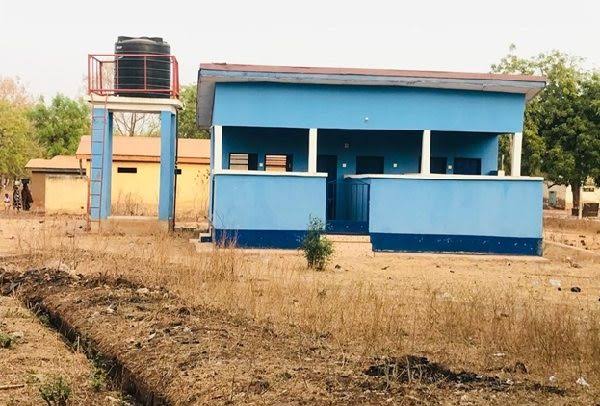
(Abuja School Toilet. Image Credit: Leadership News)
The schoolchildren at LEA School in Kpadna Community, Jabi District, Abuja, may soon have toilets they can actually use.
The Federal Government promised to fix the school's toilets and bring back its water supply after learning that children had to go outside in the open because the toilets were locked due to a lack of water.
News reports say children had no choice but to use the open ground as a toilet.
The Minister of Environment, Mallam Balarabe Abbas Lawal, made the announcement through the ministry's Permanent Secretary, Dr Salihu Usman, at the 2026 World Toilet Day event in Kpadna on Thursday.
He called the situation unacceptable and demanded urgent action.
Lawal said the problem was particularly troubling because the school already had toilet facilities.
They were unusable because the water supply was unreliable.
The planned intervention includes an immediate assessment and restoration of the toilets, a dependable water supply, rehabilitation of the facilities and a sustainable sanitation management system for the school.
Environmental health education and continuous monitoring will also be part of the plan.
The minister said toilets without water, maintenance and proper management do not amount to real access to sanitation.
"A toilet that could not be used was effectively no toilet at all," he said.
He warned that the situation exposes schoolchildren, especially girls, to health risks, indignity and embarrassment, and could affect their education and wellbeing.
Adolescent girls, he noted, need private toilets, clean water and proper menstrual hygiene facilities to take full part in school.
Lawal directed the Inter Ministerial Committee for the World Toilet Day commemoration and the Department of Pollution Control and Environmental Health to work with the FCT Administration, area council authorities, education officials, water agencies and development partners.
He also asked for the LEA School case to be documented as a case study to guide similar fixes in other schools and public institutions.
He pointed to the 2024 Nigeria Demographic and Health Survey, which found that about 20 per cent of households in the country still practise open defecation.
He said poor sanitation fuels diseases such as cholera and typhoid and contaminates water sources.
According to him, the ministry is stepping up sanitation advocacy, training environmental health officers, promoting community waste management and running programmes to end open defecation.
He also called for more private sector involvement in affordable and environmentally friendly sanitation solutions.
Speaking through the Director of Pollution Control and Environmental Health, Mrs Omotunde Adeola, the Permanent Secretary said the event was an opportunity to renew the country's commitment to safe sanitation and public health.
She said sanitation is about more than building toilets, and also involves human dignity, personal safety and environmental protection.
Adeola said Kpadna was chosen as the host community to bring sanitation advocacy closer to residents and turn government promises into practical action.
She stressed that sanitation facilities must stay functional, accessible and well maintained, backed by a reliable water supply.
World Toilet Day 2026 focused on how clean, safe toilets help everyone especially women and girls have a fair shot at a healthy, successful life.
Lawal said Nigeria aims to end open defecation and provide universal access to safe sanitation by 2030, in line with Sustainable Development Goal 6.
He said this will need sustained investment, behaviour change and active participation from governments, development partners and communities.
He urged states, local councils, ministries, NGOs and development partners to work with the Federal Ministry of Environment to expand safe sanitation across the country.
He also called for toilets in schools, health facilities, markets, motor parks and other public places to be safe, clean and working, especially for women, girls, children, older persons and people with disabilities.
He thanked UNICEF, SATO, the Inter Ministerial Committee, Environmental Health Officers, traditional institutions and other partners for supporting the event, and urged communities to take ownership of sanitation improvements.
He added that Nigeria cannot achieve gender equality while women and girls lack safe and private toilets, or deliver quality education while children are forced to defecate in the open because school toilets are unusable.