Home Contact Us Tip Us: [email protected]






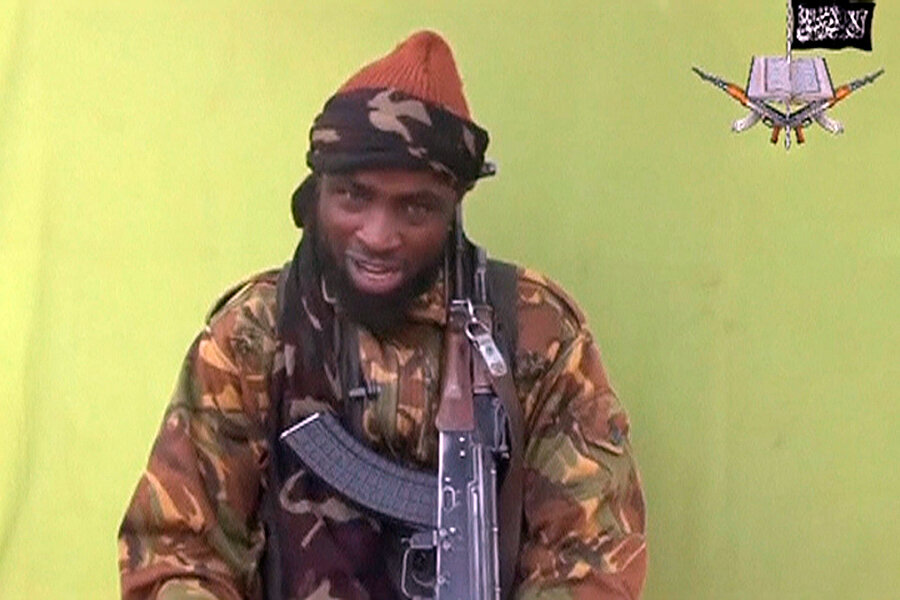
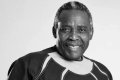
Danjuma Ali-Keffi, a retired Nigerian Army Major General, has shared an in-depth insider account of how a covert military and intelligence operation weakened Boko Haram and paved the way for the de@th of its notorious leader, Abubakar Shekau.
Ali-Keffi also alleged how internal sabotage, political interference, and high-level compromises nearly derailed the effort.
The former General Officer Commanding (GOC) 1 Division and head of the covert Operation Service Wide (OSW) outlined a broader plan jointly developed under the late Chief of Army Staff, Lt. Gen. Ibrahim Attahiru, for coordinated operations with the 8 Division to clear bandit and terrorist enclaves across Katsina, Kebbi, Sokoto, and Zamfara.
OSW was a specialised inter-agency operation focused on terrorism financing and high-level intelligence.
But he said in late July 2021, a directive came from the Muhammadu Buhari Presidency ordering all operations to halt for two weeks following assurances from Fulani leaders that they would persuade bandit groups to disarm.
He complied, as required by military discipline, but before the two-week period ended, both he and the GOC 8 Division were removed.
He lamented that the de@th of Gen. Attahiru and Brig. Gen. Abdulrahman Kuliya in the May 21, 2021 air crash dealt a major blow to the OSW’s momentum.
Ali-Keffi said the loss of Attahiru weakened operational cover, stalled ongoing offensives, and contributed to the release of several high-ranking Boko Haram commanders, financiers, and collaborators. He noted that troops’ morale collapsed as confidence in military leadership eroded, with some soldiers feeling used and unwilling to remain on the frontline.
Ali-Keffi credited the elimination of Shekau largely to Brig. Gen. Kuliya, who was the Chief of Military Intelligence, praising him for infiltrating Boko Haram networks and cleverly feeding ISWAP misleading information about Shekau’s intentions, triggering the confrontation that ultimately led to the terrorist leader’s de@th.
He said, “A large part of the credit for the ‘elimination’ of Shekau goes to the late Brig. Gen. Abdulrahman Kuliya, the Chief of Military Intelligence (CMI), who died in the plane mishap along with Gen. Attahiru on May 21, 2021.
“It was he, based on the intelligence and funds that OSW provided him with, infiltrated the Boko Haram Terrorist network and setup the chain of events that culminated in the de@th and weakening of the Boko Haram Terrorist JAS faction.
“He (Kuliya) came up with the smart idea of playing the Boko Haram and ISWAP against one another by ‘planting’ information and misleading narratives of intentions of the Boko Haram to the ISWAP.”
“This led to the infighting between the two which resulted in the weakening of the Shekau faction,” he added.
He also revealed that the operation supporting 8 Division’s offensive along the Birnin Gwari–Tegina–Mokwa axis was codenamed Operation Forest Shield, led by an Igbo officer who, he said, performed exceptionally well.
The retired military officer recalled longstanding tensions with former Chief of Army Staff, Lt. Gen. Tukur Buratai, noting that he later discovered that confidential information about the covert unit, known as the OSW, was being leaked through individuals close to the then–Director of the Nigerian Financial Intelligence Unit (NFIU), Modibbo Hamman-Tukur.
This revelation, he said, forced him to exercise extreme caution in handling sensitive intelligence.
He said, “Regarding Buratai’s dislike for me, I recall that on several occasions, the former Director NFIU told me that Buratai didn’t like me.
“I later learned that Buratai and Modibbo Hamman-Tukur’s elder brother were friends and attended the same school. I could now understand how some of information on OSW activities were being leaked. Consequently, I became extra careful with Hamman-Tukur.”
He added that the then–Director of the NFIU nearly compromised the entire operation by attempting to hold a joint world press conference to claim credit, an action Ali-Keffi said would have exposed the covert structure and alerted Boko Haram and its international backers.
Ali-Keffi further disclosed that after his arrest and subsequent detention for 64 days, the OSW picked up credible intelligence indicating that elements within the previous administration planned to frame him for treason and eliminate him through lethal injection or poisoning.
He said the OSW alerted a Western ally, prompting the United States to intervene. Two weeks into his detention, U.S. Secretary of State Anthony Blinken visited Nigeria to warn against any harm being done to him.
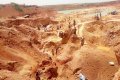
He also alleged that key officials of the last administration were complicit in the surge of banditry and kidnappings across the North West and North Central, driven by illegal mining interests involving both local and foreign actors.