Home Contact Us Tip Us: [email protected]







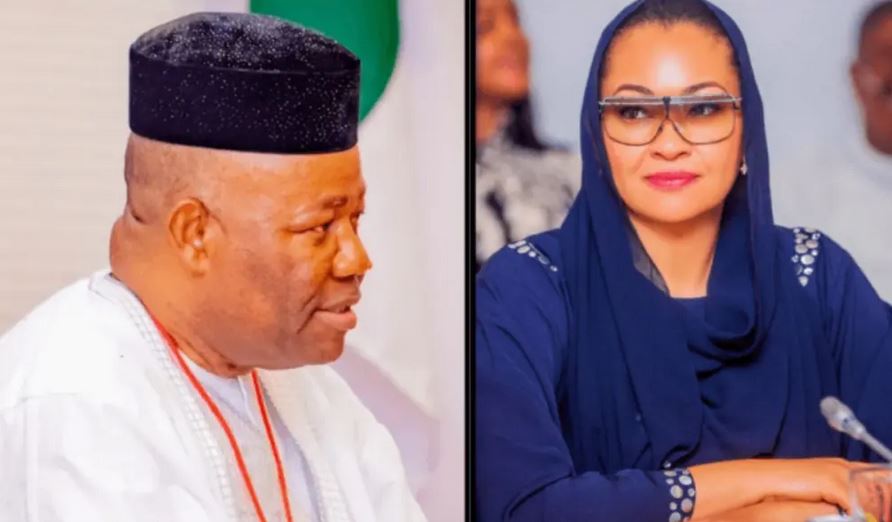
Senate President Godswill Akpabio has explained why he chose to withdraw his defamation lawsuit against Senator Natasha Akpoti-Uduaghan, along with other ongoing legal cases.
Speaking via a statement by his Special Adviser on Media and Publicity, Eseme Eyiboh, the senate President explained that his move was a deliberate choice.
According to him, he decided to set an example of restraint and credibility rather than engaging in constant legal battles that could distract from governance.
He said the withdrawal was rooted in moral authority, faith, and the demands of legislative leadership.
The statement partly read, “In a political culture where litigation has become an extension of reputation management, this was no minor gesture. Akpabio had been unapologetic about defending his name through the courts.
“The law, in his hands, had been both shield and sword. To voluntarily lay it down is to interrupt a habit of power. The question, therefore, is not whether Akpabio could afford to forgive. It is why he chose to do so.
“This is where forgiveness ceases to be sentimental and becomes political philosophy. The same drive for tangible outcomes has characterised, albeit differently, his tenure as Senate President.
“The Senate has been unusually productive and notably calm, more than ninety-six bills passed in two years, with over fifty-eight assented to by the President.
“In a chamber once notorious for theatrics, this stability is not accidental. It reflects a leadership style that values restraint over spectacle and consensus over conquest.
“This is why the withdrawal of lawsuits should be read not merely as personal forgiveness but as public modelling. Forgiveness, in this sense, becomes civic pedagogy,” he stated.