Home Contact Us Tip Us: [email protected]







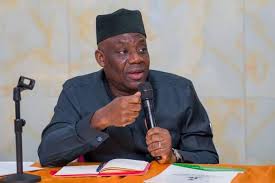
(Minister of Education, Tunji Alausa. photo credit: vangaurd news)
The National Examinations Council, or NECO, introduced computer-based exams (CBE) on Thursday, marking a significant change to Nigeria's examination system. The country also celebrated the examination body's 25th anniversary with glowing tributes to its transformation from a troubled national initiative to an internationally recognized assessment organization.
At NECO's Silver Jubilee celebration in Abuja, Dr. Tunji Alausa, the minister of education, announced the reform. He said that the shift to technology-driven exams would drastically reduce test misconduct and position Nigeria's evaluation system for global competitiveness.
Alausa referred to NECO as a “standard-bearer for credible external examinations” while speaking during the ceremony at the Bola Ahmed Tinubu Conference Centre in Garki, Abuja, saying the council had become a critical pillar in safeguarding integrity, fairness and accountability in Nigeria’s education sector.
"The Computer-Based Examination, which will start this year, is a very significant reform that NECO is leading," the minister stated.
He said that the new technology would track suspicious activity, monitor candidates in real time, and significantly lower exam fraud, which has been undermining public exam confidence.
According to the minister, Nigeria's commitment to creating a reliable national examination system that can ensure equal chances for students across is reflected in NECO's 25-year history.
He pointed out that the council had expanded access to exams in underprivileged areas, strengthened exam security, increased scoring reliability, and welcomed technology advancements that restored public trust in national certification throughout the years.
Alausa stated that in order to guarantee that NECO exams are in line with national curriculum, learning objectives, and more general development goals, the Ministry of Education would continue to provide policy guidance and control.
He emphasized that 21st-century skills like critical thinking, problem-solving, and digital literacy must be incorporated into educational assessment in the future, going beyond memorization.
"May NECO and the Ministry of Education continue to work together as we celebrate this Silver Jubilee, fostering trust, driving reform, and ensuring that certification remains a passport to brighter futures for all students," he declared.
Prof. Dantani Ibrahim Wushishi, the NECO Registrar and Chief Executive, stated in his speech that the council has expanded outside of Nigeria and is currently administering exams in eight nations. He characterized this as proof of the growing international trust in NECO certificates.
He said that through open procedures, timely results releases, and adherence to worldwide best practices, the examination body—which was founded in the face of considerable skepticism, infrastructural shortcomings, and credibility issues—had evolved into a globally recognized organization.
According to Wushishi, "NECO is now a standard for reliable exams in the area and among peers worldwide."
He continued by saying that NECO's certificates are now widely recognized abroad, improving Nigerian students' access to further education and career opportunities.
The registrar said that the council had started extensive infrastructure growth and changes, including building offices in ten states, creating digital verification systems, implementing e-certificates, and setting up data analytics and e-library platforms.
He stated that the council has established more zonal directorates to enhance staff development and service delivery, and that it had just acquired dozens of operating vehicles to bolster national examination logistics.
As part of NECO's future development program, Wushishi also revealed plans to increase digital services, bolster exam security procedures, and step up anti-cheating measures.
He praised former presidents and heads of state, such as Generals Ibrahim Babangida, Abdulsalami Abubakar, and Olusegun Obasanjo, for their contributions to the development and institutionalization of NECO.
The registrar also thanked the Niger State government, governing boards, education ministers, and previous registrars for supporting the council throughout its early and pivotal years.
He claims that one of the events commemorating the milestone was the release of a commemorative historical publication titled "Twenty-Five Years of NECO: Evolution, Challenges and Contributions to Nigeria's Educational Assessment System."
Top government officials, legislators, education stakeholders, and experts in international assessment attended the event, including Dr. Mafu S. Rakometsi of South Africa, President of the International Association for Educational Assessment, and Dr. Eshetu Kebede of Ethiopia, President of the Association for Educational Assessment in Africa.
Attendees praised NECO's journey as a significant national success story and expressed hope that Nigeria's educational assessment system would enter a new era of efficiency, transparency, and worldwide relevance with the switch to computer-based exams.