Home Contact Us Tip Us: [email protected]







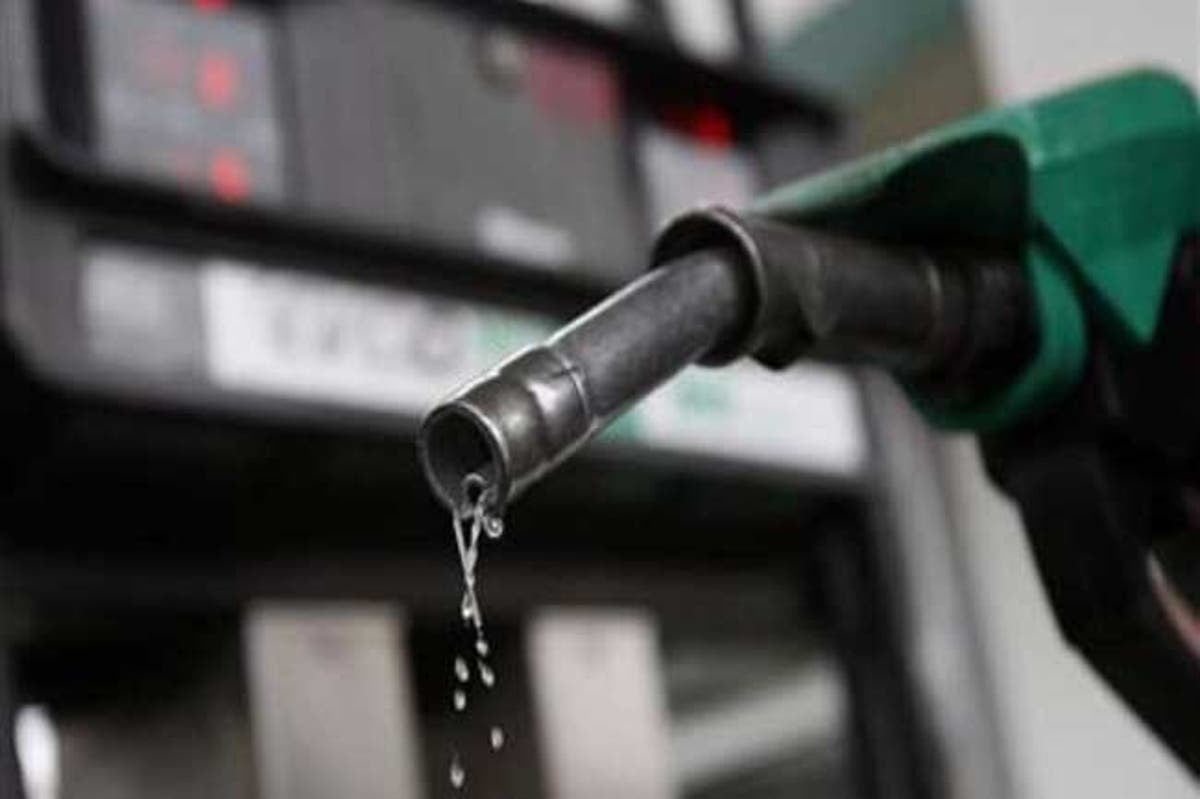
(Fuel Pump. Photo by Guardian News)
The Nigerian Midstream and Downstream Petroleum Regulatory Authority (NMDPRA) yesterday joined forces with the Federal Competition and Consumer Protection Commission (FCCPC) in warning oil marketers against profiteering and arbitrary increases in the pump prices of petroleum products.
The NMDPRA's warning came three days after the Minister of State for Petroleum Resources (Oil), Heineken Lokpobiri, directed the Authority to intensify surveillance across the downstream sector and ensure that Nigerians benefit from the recent fall in global crude oil prices.
He gave the directive at the NMDPRA General Counsel and Legal Advisers Forum in Abuja.
However, fuel marketers disagreed, warning that they would shut down filling stations nationwide should the Federal Government attempt to impose price control on petrol in the country's deregulated downstream petroleum sector.
The Petroleum Products Retail Outlet Owners Association of Nigeria (PETROAN), on the other hand, aligned itself with the ministerial directive, insisting that the Minister has the authority to intervene in the interest of consumers, though it added a caveat that any decision should be taken after consultations with stakeholders.
PETROAN called on the Minister of Petroleum Resources to convene an emergency meeting involving regulators, refiners and marketers to address the pricing concerns and arrive at solutions acceptable to all parties.
The NMDPRA, in a statement by its Director, Corporate Affairs, Ondaje Ijagwu, expressed concern over the outcome of its findings from surveillance of the downstream petroleum market, which suggested undue exploitation of consumers.
The regulator, in a separate statement issued yesterday by its Head of Media and Public Relations, George Ene-Ita, said it had begun monitoring activities at depots and retail outlets across the country and would not hesitate to sanction marketers found engaging in price gouging.
The statement, titled "Pump Prices of Petroleum Products Must Be Cost Reflective," noted that the authority had taken cognisance of the downward movement in international crude prices and was committed to ensuring that the benefits of market realities are reflected in domestic petroleum product prices.
According to the statement, the NMDPRA noted the global drop in crude oil prices and assured Nigerians that pump prices of petroleum products must be cost-reflective, in line with the Petroleum Industry Act (2021).
It said oil marketing companies have been cautioned against price gouging and profiteering, and that depots and retail outlets are being monitored, with regulatory sanctions to be applied where necessary.
The Authority added that it was working with security agencies and other critical stakeholders, including the FCCPC, to guarantee consumer protection, and reassured the public of its commitment to monitoring the midstream and downstream sector and ensuring adequate and reliable supply of petroleum products nationwide.
Earlier in the week, Lokpobiri had directed the NMDPRA to strengthen its oversight functions and ensure that no operator exploits Nigerians through unjustifiable pricing practices.
In issuing the directive, the Minister said the deregulation of the downstream petroleum sector was not intended to create room for excessive profiteering but rather to encourage competition, efficiency and fair pricing.
Lokpobiri had stressed that while government would not fix prices, given that the downstream sector has been deregulated, market operators must nonetheless act responsibly and ensure that price adjustments accurately reflect changes in international oil prices and foreign exchange conditions.
He said pricing was an issue he wanted the forum to address, noting that as part of the requirements of deregulation, prices have to be determined by market forces, while stressing that the NMDPRA has a unique responsibility, reinforced by the Petroleum Industry Act (PIA), to ensure not only that products are available but also that unnecessary profiteering is curbed.
He acknowledged that the market is deregulated but argued that this does not eliminate the need for oversight.
He noted that he had been following television discussions in which he was being called upon to speak up, but stressed that he was not interested in engaging in any press war with anyone, adding that what mattered was the reality of the situation in the industry, and that while market forces must primarily determine prices, government also has a responsibility, as is the case globally, to ensure that there is no profiteering, noting that the PIA specifically vests this responsibility in government institutions, including the NMDPRA.
He made these remarks at the Abuja Forum on Monday.
The National Publicity Secretary of the Independent Petroleum Marketers Association of Nigeria (IPMAN), Chinedu Ukadike, reacting to the Minister's comments at the forum, warned that enforcing price controls in a deregulated market would contradict the provisions of the PIA and discourage investment in the sector.
According to Ukadike, allegations that marketers were profiteering were false, insisting that many operators were instead recording heavy losses due to repeated reductions in depot prices, particularly by the Dangote Refinery.
He warned that should the government attempt to strong-arm marketers, they may be left with no option but to shut down their retail outlets.
He said that if the government tries to enforce price control, marketers would shut down filling stations nationwide, arguing that a deregulated market cannot simultaneously be subjected to dictated selling prices without regard for the cost of purchase.
The IPMAN spokesman argued that marketers often buy fuel at higher prices only for depot prices to fall before they can sell, leaving them with losses while still servicing bank loans used to finance purchases.
According to him, the solution to high petrol prices is not government intervention in pricing but increased competition through improved local refining capacity and expanded fuel importation.
He urged the Federal Government to focus on reviving domestic refineries and creating an environment that encourages competition, which he said would naturally drive down fuel prices.
The Commission said the measure had become necessary after it observed that despite a downward review of the gantry prices of petrol by domestic refiners, marketers, depot owners and retail outlet operators only reflected a negligible price reduction that was not commensurate with the steep fall in crude prices on the global market.
The positions taken by Lokpobiri, the NMDPRA and the FCCPC may well be justified, given that following a ceasefire agreement between the U.S. and Iran two weeks ago and the reopening of the Strait of Hormuz, crude oil prices have been on a steady decline, falling to $71.99 per barrel for Brent crude and $69.23 per barrel for WTI yesterday, a sharp drop from the peak of $120 per barrel recorded in April, returning to pre-US-Iran war era prices last seen in February.
The earlier global spike in crude prices had led local refiners and marketers to swiftly raise pump prices across the country, with petrol climbing to between N1,350 and N1,500 and diesel selling at N2,000 as hostilities intensified in the Gulf between April and May, compared to an average of N800 to N900 per litre for petrol in February.
Presently, despite the global fall in crude oil prices, petrol is still sold at an average of N1,200, even though some local refiners have fixed their gantry prices at between N1,025 and N1,075.