Home Contact Us Tip Us: [email protected]




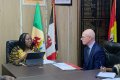
(Minister of State for Education, Prof. Suwaiba Ahmad. Photo by Whistler News)
On Wednesday, the National Examinations Council's ongoing school-based Senior School Certificate Examination was deemed satisfactory by the Federal Government.
It characterized the Computer-Based Test format as a significant turning point in the nation's attempts to eradicate exam misconduct and raise the standard of secondary education.
Prof. Suwaiba Ahmad, the Minister of State for Education, made this declaration after observing exams at Anglican Girls' Grammar School in Gudu, Abuja, and Redeemers Teap International School in Garki II.
According to Prof. Ahmad, the monitoring exercise revealed that candidates had adopted the CBT format, with the majority of students characterizing it as more convenient and easier to use than the conventional paper-based exam.
"I'm really pleased with the exam since, based on what I observed in the two centers I visited, the students are taking the CBT exam and seem content. "It's a great environment for the test," she remarked.
Only one student expressed equal preference for both the computer-based and paper-based systems, according to the minister, who said that discussions with applicants revealed overwhelming support for the CBT format.
She clarified that one of CBT's main benefits is its capacity to drastically lower exam misconduct through question randomization.
Since that is one of the main issues we are attempting to address with CBT, I spoke with them to find out if they had seen the questions prior to the test.
They refused. Even students seated next to one another are unable to converse since each student is writing a unique set of questions, she said.
The minister claims that while the Federal Government is still dedicated to increasing CBT exams across the country, a complete transition won't be carried out until the infrastructure is in place to guarantee that no applicant is at a disadvantage.
"We don't want to disadvantage any students, therefore we won't start the full changeover until everything is prepared.
In order to provide the facilities and infrastructure required for the transition, we are collaborating closely with the National Assembly, state governors, commercial partners, and other stakeholders," she stated.
Ahmad also praised the exam's technological performance, pointing out that neither officials nor candidates had reported any instances of network failure, system malfunction, or delays since the test's start.
"I inquired about any technical issues with obtaining the questions or initiating the test in the schools I visited. I was reassured that there had been no technical difficulties.
There were no network issues or disruptions, and the exams began on schedule," she continued.
She cited the exam's seamless administration as proof that NECO's CBT pilot program had made great strides and was progressively developing into a viable national model.
The minister emphasized the government's commitment to protecting the integrity of public exams and stated that using technology is still the best way to combat exam cheating.
"I believe the only way forward is to move towards CBT examinations, as we must eliminate examination malpractice if we want quality education," she said.
Prof. Ibrahim Dantani Wushishi, NECO Registrar, also spoke following the monitoring exercise and stated that the council was on track to disclose the results of the 2026 Senior School Certificate Examination by the first week of September, or perhaps earlier, because of the quicker processing made possible by the CBT system.
"We should be ready so that candidates can use their results for admission by the first week of September, or even earlier," he stated.
Wushishi revealed that 1,378,048 candidates nationally enrolled for the test, with slightly more female candidates than male ones.
He ascribed this to ongoing government initiatives to support girls' education.
He also mentioned that there are currently roughly ten approved CBT centers in Abuja taking part in the exercise, and he affirmed that no technical issues have been detected since the start of the CBT exam.
According to Nkiruka Nwafor, principal of Anglican Girls' Grammar School in Gudu, the change is an essential step in educating children for a world that is becoming more and more reliant on technology.
“The CBT experience is what we’ve all been waiting for. The future our girls are going into is dynamic and heavily ICT-driven.
“We are excited that our proprietor got on board. We have also introduced CBT for some of our internal examinations so that from JS1 and JS2, the students gradually get used to the system. So it’s about time, and it’s good that it’s happening,” she said.
The Federal Government has intensified efforts to digitise public examinations as part of broader reforms aimed at improving the credibility, transparency and efficiency of Nigeria’s education system.
Following the successful pilot of CBT in selected NECO subjects, the government has outlined plans for a gradual nationwide transition, supported by investments in digital infrastructure and collaboration with state governments, the National Assembly and private sector partners.
The move aligns with the Ministry of Education’s wider education reform agenda under the Renewed Hope Agenda, which prioritises technology-driven learning, improved assessment standards and the elimination of examination malpractice across all levels of education.
NECO’s expanding adoption of CBT also follows similar digital examination models already implemented by other national examination bodies, including the Joint Admissions and Matriculation Board .