Home Contact Us Tip Us: [email protected]





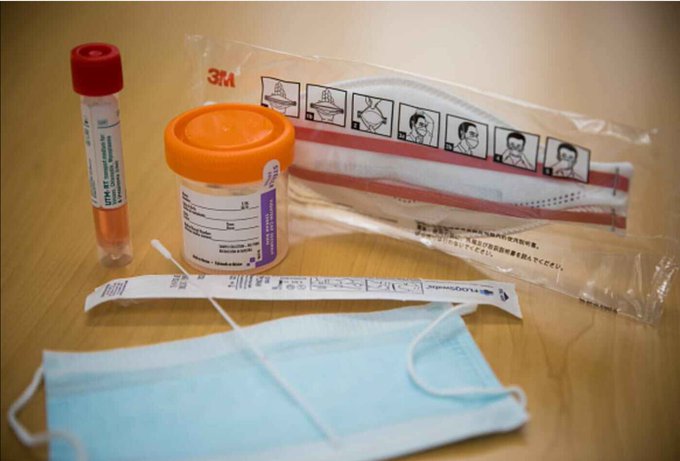
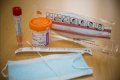
(Test Kits. Photo by Premuim Times)
Nigeria has been named among the high volume markets where a new one dollar testing package could help expand screening of pregnant women for HIV, syphilis and hepatitis B
The package was launched by Premier Medical Corporation and Impact Nexus Africa and bundles two rapid tests into one offer for use in existing antenatal clinics.
Other countries on the list are Ethiopia, Tanzania, Uganda, Kenya, Mozambique and South Africa.
The Triple Elimination Testing Bundle costs one dollar per woman screened, ex works.
It has a WHO prequalified First Response HIV 1+2/Syphilis Combo Card Test and a First Response hepatitis B surface antigen Card Test.
The tests stay separate but are sold together, and the price includes digital training and assessment tools for users.
The price does not cover freight, local distribution, taxes, regulatory costs or other programme expenses, and orders must be at least 100,000 bundles.
The companies say the bundle is 22 to 46 percent cheaper than buying the tests separately.
Impact Nexus Africa estimates it could save about 215 million dollars across 74 low and middle income countries between 2026 and 2035.
Annual savings could pass 10 million dollars in some big markets and stay below one million dollars in smaller ones.
This is based on modelling, not confirmed savings for any country, Nigeria included, and real savings will depend on each country's current prices, testing volumes and how fast rollout happens.
The analysis also projects that about 17.1 million women with hepatitis B could be identified and around 2.7 million infant infections averted in the period.
This depends on how many women get tested, local hepatitis B levels and whether those who test positive are linked to proper care.
WHO recommends that pregnant women be tested for HIV, syphilis and hepatitis B at least once, as early as possible.
HIV and syphilis testing is now common in antenatal care, but hepatitis B screening is still patchy.
The companies say the bundle can work for countries that already screen and those starting out, using existing clinic systems.
For Nigeria, the gap is wide.
A 2026 analysis of Demographic and Health Survey data found that 72 percent of mothers attended antenatal care but only 12.3 percent were tested for hepatitis B.
An earlier study of about 2.8 million pregnant women across more than 6,000 facilities found only 7.2 percent were screened.
In 2025, the Federal Ministry of Health and Social Welfare said it planned to introduce free hepatitis B testing, treatment and care for pregnant women who test positive.
The package is open to public and private buyers in all low and middle income countries, subject to national registration, importation and procurement rules.