Home Contact Us Tip Us: [email protected]






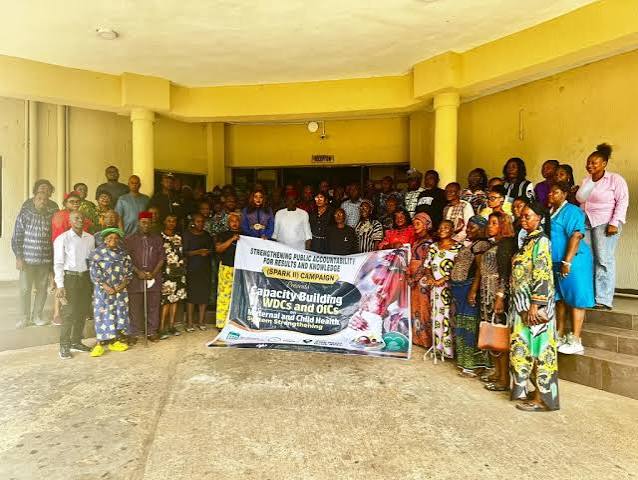
(Participants at the workshop. Photo Credit: Ikenna Obianeri)
The Anambra State Government is going to hire 250 more medical staff to improve basic healthcare at local clinics across the state.
The plan includes 200 Community Health Extension Workers and 50 midwives.
The state wants to fill gaps in its clinics as concerns grow about staff who do not show up for work.
Dr Chizoba Ezeasor, Executive Secretary of the Anambra State Primary Healthcare Development Agency, made the announcement in Awka on Thursday.
She spoke at a training programme for ward development committees and officers in charge of primary healthcare centres.
The workshop focused on improving maternal and child health and was organised by JDPC Nnewi under the SPARK II project, backed by the International Budget Partnership.
Ezeasor said the new workers will be chosen for their skills and commitment, with a preference for people willing to live in the communities they serve.
This, she said, should improve access to care and make health workers more accountable.
She also warned against picking staff based on politics and said only competent people ready to serve should be hired.
She was concerned that some officers in charge are not at their posts as often as they should be.
She called for more discipline and commitment from health workers.
She said the true test of the health system is the quality of care patients get, not the number of buildings, machines or staff.
Ezeasor also urged clinics to give pregnant women quick attention, clear information, privacy and respectful treatment during antenatal care, delivery and after birth.
She praised the state for offering free antenatal care and delivery services in public facilities.
However, she stressed that free care must also be easy to access, safe, prompt and of good quality.
Ehiaruhuike, Executive Director of SIDEC, said the SPARK II project aims to set up a structured system for collecting feedback from the community.
The current system relies on informal complaints that are rarely recorded.
The project plans to train at least 50 ward development committee members and 24 officers in charge to gather, record and respond to patient experiences, especially around antenatal, delivery and postnatal care.
She listed high drug prices, poor sanitation, badly maintained facilities and unhappy patient experiences as major challenges the project will tackle.
Standard feedback forms, documentation guides and tracking tools will help community representatives raise complaints in an organised way and let health authorities follow up.
Reverend Father Benedict Okoro, Director of JDPC Nnewi, said the programme aims to strengthen both community groups and health workers to reduce avoidable deaths among women and children.
He acknowledged that maternal deaths have dropped in Anambra but said more work is needed.
Okay Onyeka, Executive Director of Civil Rights Concern, said maternal health is everyone's responsibility and called for a firmer push to end preventable deaths.
Tony Muobike, who represents Aguata II in the state House of Assembly and chairs its health committee, called primary healthcare the foundation of a good health system.
He welcomed the free antenatal and delivery services but said stronger oversight is needed.
He said some health officers open their facilities and leave to run private businesses, while others hand their duties to volunteers.
He promised the House will keep watching to improve service delivery.
Onyekachi Ololo, SPARK II Programme Manager at JDPC Nnewi, said ward committees and health officers must work together to build facility plans based on the gaps they find.
He noted that some committees have become inactive while still holding their posts and recommended replacing members who cannot do the job.
The workshop covered patient feedback tools, respectful care, recording maternal health experiences, data quality and finding system wide problems in primary healthcare.
Organisers said the project will set up a quarterly feedback system.
Complaints will be recorded, passed to the right authorities, followed up and monitored, with unresolved cases escalated to local government health offices and the state agency.
They hope this will strengthen community involvement and make patient experiences drive better maternal and child care across the state.