Secretary to Government of the Federation and Foreign Affairs Minister, has told the Nigerian Senate that the list of 47 ambassadorial nominees forwarded to them last month by President Buhari cannot be amended.
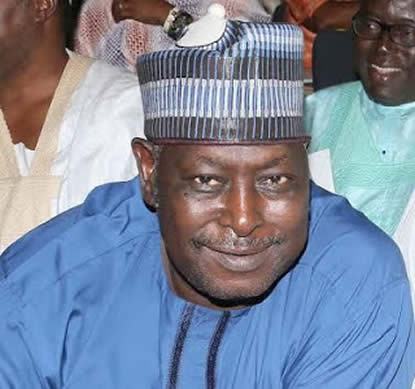
Babachir Lawal
Speaking at a closed-door meeting yesterday in Abuja, Babachir Lawal, the Secretary to Government of the Federation (SGF), and Geoffrey Onyeama, the Minister of Foreign Affairs, told Senate Committee on Foreign Affairs that the list of 47 ambassadorial nominees forwarded to them last month by President Muhammadu Buhari cannot be amended.
Recall that
we reported it here few weeks ago that during a plenary session at the National Assembly, members of the senate resolved a motion and summoned Babachir Lawal and Geoffrey Onyeama, over alleged irregularities in the ambassadorial list which generated much controversy in the lopsidedness of the list which excluded nominees from Ondo, Bayelsa, Ebonyi and Plateau states.
The duo of SGF and minister who appeared before the senate committee yesterday after their summon, said those on the ambassadorial list, nominated under the prerogative of the President, do not need to cut across the 36 states of the Federation as is the case with ministerial nominees.
According to
Daily Sun, the SGF specifically said in his explanation, that the list was based on certain criteria and not the other way round and that, even at that, 32 out of the 36 states in the federation were captured, which to him, showed substantial compliance with the federal character principles.
He said part of the criteria used in the selection of the nominees apart from their respective records of service, is change compatibility value of the nominee in line with the change agenda of the present administration.
He, however, along with the minister, assured the committee that the four states omitted in the list, would be compensated in the non-career list that would soon be forwarded to the Senate by the President.
Efforts by committee members to grill the SGF and the minister further were, however, not allowed by the chairman, Monsurat Sunmonu, who ordered a closed-door session for further discussion.
 Home
Home