Emmanuel Oladesu examines the way forward for the Zimbabweans after their long-serving leader, Robert Mugabe, finally resigned as president after 37 years.
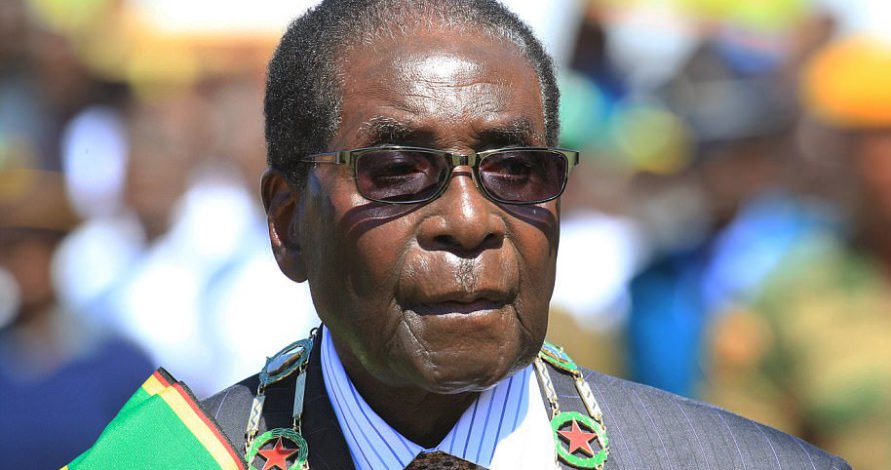
Robert Mugabe
Yesterday was a turning point in the history of Zimbabwe. Its long-standing dictator, Robert Gabriel Mugabe, was forced to resign. The nonagenarian despot surrendered with great reluctance. If he had the chance, he would have rejected the last and only option and insisted on a thoughtless and illegitimate tenure elongation. But, the old man could not dare its costly implications. He started well as a leader; a nationalist with an enviable record of struggle against colonisalism. But, being power drunk, he ended on a sore note as a spent force.
There was no escape route for the leader who now has to endure the shame of rejection for it. Impeachment was dangling on his head. Gone with the winds was his succession plan to hand over to his wife, Grace. A farewell ceremony was not even contemplated 37 years after. Mugabe was deserted. Although he attempted a heroic resistance, it was futile. Mugabe told his psychological tormentors that he looked forward to presiding over the party congress next month. He was actually day-dreaming. The handwritings were bold on the wall. He chose to ignore it. Now, he bears the consequence of pomposity, high-handedness, impunity, corruption of power and dictatorship.
The lesson is instructive. Leaders should always aspire to become statesmen. They should learn to leave the stage when the ovation is loud. They should thread the Mandela path of honour and vacate the stage for the younger ones to continue the work of development and the unfinished struggle for a better society. They should know that, in the final analysis, power is transient and no condition is permanent.
As he leaves the seat of government, Mugabe may not proceed on a blissful retirement. The ghost of his tragic acts and misdeeds may continue to hunt him. The emotional wrenching may be underscored by the lack of opportunity to repent and correct past mistakes. Zimbabwe will definitely be hot for him. In memory of the horror of 37 years, the environment may not be safe. Therefore, his exile in South Africa is a relief to his anxious family and associates. His contributions to national development may have also ended. Successive leaders may not consult him for advice or believe that he has any good thing to offer outside power.
After settling down in exile, Mugabe has a big opportunity to reflect on his tenure. He had served creditably in the past before he derailed. Sources said he may be insulated from an immediate probe. The former leader should apologise for his reign of horror and ask successors to learn from his fall from grace to shame.
Many observers have pointed out that Mugabe was lucky that he was not killed by his collaborators-turned accusers and coup plotters. His departure meant that Zimbabwe has overcome a major hurdle. The obstacle to legitimate democratic succession is out of the way. But, other challenges still stare the country in the face.
The former president left behind a country in disarray; utterly disunited and economically hopeless. Zimbabwe is on its knees. Inflation is killing the country. Its currency has paled into a worthless measure and store of value. Its key exports are on the decline. Industries are not thriving. Mass employment is a time bomb. Its foreign reserve is at a low ebb. Its pride; a sound educational system; was being threatened. Many critical sectors are ailing. In the international community, the country is isolated. There is no flow of investment, owing to Mugabe’s hostility against major world powers. The country is battling with foreign sanctions. Its tourism potentials are gone.
Also, institutions of democracy have been weakened. Human rights abuse by government has turned the country into a Banana Republic. Periodic elections did not count. When Mugabe was voted out, he rejected the outcome of a credible poll and turned the heat on the winner, blocking the prospect of power shift to the opposition, based on popular choice. The role of opposition in democracy was lost. Mugabe ruled as if Zimbabwe had become a one-party state.
His successor, former security chief and sacked Vice President Emmerson Mnangagwa, will inherit the burden. He should brace for the tasks of reconciliation, reconstruction and rehabilitation. He should pacify the aggrieved, foster national harmony and rebuild national confidence.
Mnangagwa has the backing of the mutineers, but his official acts when he assumes the reins must command the respect and confidence of the liberated people. The first task for the interim leadership is to unite the divided country and nurture a democratic culture that has been alien to it for decades. The caretaker government must be a Government of National Unity comprising representatives of critical stakeholders, including the ruling and opposition parties, civil society groups, the Armed Forces, labour and, as it has been suggested by Zimbabweans, the religious groups.
The interim government should provide a level playing ground for political parties during the next parliamentary and presidential elections. The umpire should be impartial, patriotic and committed to the cause of one Zimbabwe in an atmosphere of free and fair election.
Also, Zimbabwe, under the interim regime, should halt past trends of hostility and make friends with the outside world. Sovereignty should not be compromised. But, in a world of inter-dependence, no country can exist and survive independently of other countries.
The impoverished country will not forget Mugabe in a hurry. The memory of horror will linger. Mugabe had foreclosed retirement at 93. He said he wanted to hit a century in power. The country had become his fortress. He brooked no opposition. He was the president. He was the state. As he became a dictator, his previous enviable record was obliterated from the collective memory of the people he oppressed.
Mugabe, the Marxist, buried himself in the quest for materialism. He converted the corridor of power into an avenue for private accumulation. The founder of the socialist-nationalist movement, ‘ZANU,’ which drove the British out of the homeland, became a man of immense wealth at the expense of his beleaguered nation. The former prime minister, and later, president, who managed to unite the Zimbabwe African People’s Union (ZAPU) and the Zimbabwe African National Union (ZANU) became a divisive figure in national politics at the twilight of life.
Mugabe built on the mistake of 2008. That year, he lost the presidential election to his rival, Morgan Tsvangirai. But, he refused to bow out with dignity. He wielded the power of incumbency, which crashed last week. He demanded a recount of the votes, waging war against opposition figures, maiming and killing perceived political foes. Reason prevailed temporarily when Mugabe and Tsvangirai reached an agreement on power sharing. But, the terms were later violated by the former president who announced his bid for the 2013. He was declared as winner of the poll by the electoral commission. Mugabe’s plan was to become the life president or hand over to Mrs. Grace Mugabe, a move that did not go down well with the ruling party.
But, can the new leadership tackle the challenge of healing the wounds of the nation? Will Zimbabwe chart a new way forward or jump from frying pan to fire? Will a legitimate government succeed the interim government? Will another dictator emerge in post-Mugabe era? Will the people take their destiny in their hands? What awaits Zimbabwe in the future?
**
Written by Emmanuel Oladesu/ The Nation
 Home
Home