Finance minister has said the focus of the present administration was to stimulate the economy and achieve real gross domestic product, growth rate of 4.2 per cent through the 2016 budget.
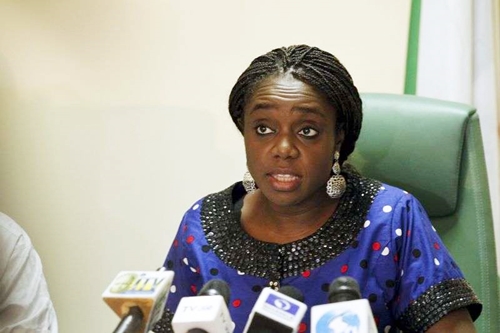
Nigeria's Finance Minister, Kemi Adeosun
Presenting a paper titled: "Nigeria’s Economy: The Road to Recovery," Minister of Finance, Kemi Adeosun, said on Thursday that the full and diligent implementation of the 2016 budget would help the federal government achieve recovery of slowing economic growth, to forestall the remote possibility of recession,
She added that the focus of the President Muhammadu Buhari administration was to stimulate the economy and achieve real gross domestic product (GDP), growth rate of 4.2% through the 2016 budget.
She concluded that the present administration was equally determined to reduce the cost of governance, extract efficiencies in public service and enhance revenue collections.
"The administration plans to increase government expenditure on infrastructure, namely transport, roads, housing and power with a view to achieving a substantial increase in gross capital formation and to fund the budget deficit and the negative trade balance in a cost effective and efficient manner.
This will keep the government within the acceptable debt sustainable ratio expected of most emerging economies."
The minister noted the impact of sliding crude oil prices on the Nigerian economy, saying government’s main macroeconomic objective in 2016 was to combine an expenditure-led growth strategy with a stimulant approach based on injections of more efficiently collected revenues and blocking of leakages.
"The combination of these fiscal injections will have a catalytic multiplier effect on the GDP growth rate," she explained.
Mrs. Adeosun also said the present administration would go ahead with its robust commitments on infrastructure development in spite of dwindling crude oil price.
"For an economy dependent on crude oil for 70 per cent of government revenues, the 12-year low in oil prices, the downward revisions to the global outlook and the re-ordering of the global economy, are ominous signs.
For years, oil prices were at historic highs, and at US$114 per barrel, we spent, government spent; people spent and our economy seemingly ‘grew’. But, this growth masked much vulnerability.
There were consistent warnings about the volatility of oil prices and the need to diversify our economy to support our huge population. Whilst we paid lip service to this need and extolled the potentials of many sectors, we did not plan adequately to ensure that we worked towards this," She added.
 Home
Home