Home Contact Us Tip Us: [email protected]






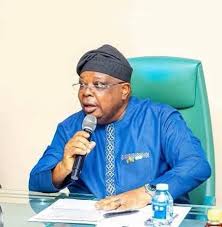
(Mr. Joseph Tegbe. Photo by Instagram)
After Mr. Joseph Tegbe passed the plenary screening, the Senate confirmed him as Minister of Power on Wednesday.
According to the News Agency of Nigeria (NAN), the Senate Committee of the Whole deliberated extensively before confirming Tegbe.
The senators pointed out that although Nigeria's installed generation exceeded 13,000MW, the country's real supply hardly ever exceeded 4,500MW due to the country's still-weak transmission and distribution infrastructure.
In response to inquiries about Nigeria's electricity issue, Tegbe stated that he was optimistic that noticeable changes will occur in three to six months.
He stated that Nigerians and President Bola Tinubu anticipated quantifiable advancements, promising prompt measures to tackle the persistent problems with electricity.
Tegbe assured the Senate and Nigerians that his administration would provide tangible advancements that may revolutionize the power industry.
"I pledge to this chamber and to Nigeria that there will be noticeable progress in the industry," he declared.
He promised to increase accountability and transparency in public sector performance while performing independent diagnostics of the power industry.
Tegbe promised to improve cooperation between stakeholders, the Nigerian Electricity Regulatory Commission, the Ministry of Power, and the Transmission Company of Nigeria (TCN).
Tegbe emphasized that Nigeria's electrical crisis encompassed governance, capitalization, sustainability, gas supply, and commercial inefficiencies in addition to technical flaws.
Recurrent grid collapses, he explained, are a sign of aged infrastructure, unreliable frequency control, weak transmission systems, and insufficient regulatory enforcement.
He claims that inadequate coordination, gas shortages, and transmission bottlenecks limit electricity production below the installed national capacity.
Tegbe promised to uphold accountability throughout the power value chain, modernize infrastructure, enhance business frameworks, and stabilize the country's system.
In addition to protecting disadvantaged people, he pledged that tariff revisions will balance investor confidence, sustainability, and overall sector efficiency.
Additionally, the minister-designate promised to encourage state involvement in the Electricity Act, solar expansion, and subnational investments in mini-grids.
In order to address Nigeria's ongoing electrical problem, Tegbe pledged creativity, extensive collaboration, and tough but essential choices, rejecting previous tactics that had failed.
The MPs cautioned that any reforms might be thwarted by powerful interests, such as underperforming distribution companies and importers of generators.
Godswill Akpabio, the president of the Senate, advised Tegbe to steer clear of bureaucratic pitfalls and put long-term fixes ahead of a maintenance culture driven by contracts.
Stable energy is still crucial for industrialization, national security, economic expansion, and Nigeria's development goals, Akpabio emphasized.
The Senate President also denounced the exploitative billing practices of DSTV and energy companies, asking why Nigerians pay for services they don't use while customers elsewhere benefit from pay-as-you-go systems free of unfair deductions.
Akpabio emphasized that Nigerians should have equitable consumer protection in the telecoms and power sectors and encouraged the minister-designate to address daily membership fees and anticipated billing.
He expressed gratitude to President Tinubu for the nomination and said Tegbe was the ideal candidate for the important national task.