Home Contact Us Tip Us: [email protected]



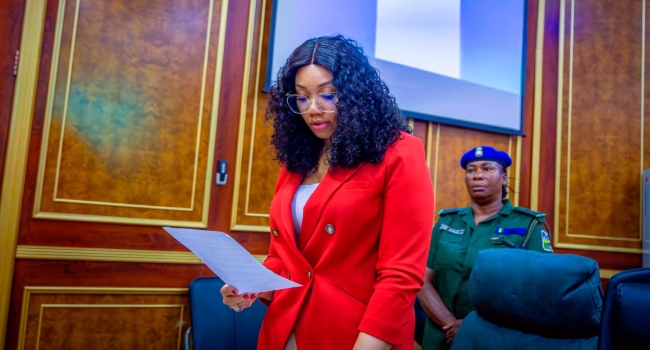
(Chioma Uzodimma. Photo by Leadership News)
The wife of the Imo State Governor, Chioma Uzodimma, has called on traditional rulers, religious leaders and community stakeholders to lead the charge in ending gender-based violence, insisting that harmful cultural practices can only be dismantled through sustained grassroots advocacy and collective action.
Mrs Uzodimma made the call in Owerri at a two-day advocacy programme and town hall meeting on the prevention of gender-based violence, organised by the Nigeria Governors' Spouses Forum in partnership with the Ford Foundation.
Themed around empowering grassroots champions for gender-based violence prevention, the event brought together wives of local government chairmen, traditional rulers, religious leaders, women leaders and community advocates to strengthen community-based efforts at protecting women and girls from violence.
Addressing participants, the First Lady described the gathering as more than an advocacy engagement, calling it instead a call to leadership and collective responsibility.
She said many harmful practices have persisted because they have been normalised and accepted across generations, stressing that trusted community leaders have a vital role to play in reshaping such narratives.
She noted that social norms shift when trusted voices speak out differently, consistently and courageously, telling participants that everyone present represented such a voice, and that as wives of local government chairmen, they occupy a unique position between governance and community life, often picking up on warning signs long before they escalate into full-blown crises.
She said the advocacy initiative was designed to prepare participants as community champions against gender-based violence, capable of promoting justice, healing and lawful intervention rather than confrontation, and urged traditional rulers and religious leaders to use their influence to discourage harmful practices and protect vulnerable members of society.
She stressed that violence should never be excused as culture, nor abuse justified as discipline, adding that protecting women and girls strengthens rather than weakens society.
She further described faith and traditional institutions as powerful platforms for promoting justice, compassion and peace, urging community leaders to speak out against violence and support survivors, noting that when leaders unite, silence is broken, and when silence is broken, change begins.
Earlier, the programme facilitator and Director in the Imo State Ministry of Women Affairs, Blessing Azubuike, said the engagement was designed to extend the campaign against gender-based violence beyond government institutions and into grassroots communities.
She said the active involvement of traditional rulers, religious leaders and community influencers would help challenge harmful social norms, improve reporting of abuse and strengthen community response systems, urging participants to become advocates within their own communities, since prevention remains the most effective strategy for reducing cases of gender-based violence.
Also speaking, the Special Adviser to the Imo State Governor on Sustainable Development Goals, Chinenyenwa Owuamalam, described the initiative as a critical step toward achieving inclusive and sustainable development, noting that gender-based violence undermines the health, education and economic wellbeing of women and girls, and that tackling it is essential to meeting the Sustainable Development Goals.
She commended the First Lady for championing community-driven interventions and expressed confidence that the advocacy would inspire lasting behavioural change across the state.
Participants at the meeting pledged to step up awareness campaigns within their communities and work with relevant authorities to prevent abuse, protect survivors and promote safer homes and communities.
The two-day programme includes community dialogues, advocacy sessions, the unveiling of public awareness materials and the inauguration of a network of grassroots advocates expected to sustain the campaign against gender-based violence across Imo State.