Home Contact Us Tip Us: [email protected]





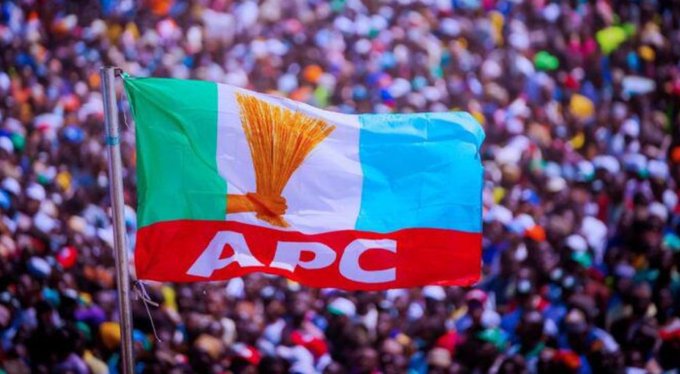
(APC. Photo by Parallel Facts)
During the first half of 2026, eleven Nigerian states led by the All Progressives Congress (APC) spent a total of ₦10.598 billion on international travel, with Zamfara, Yobe, Kogi, and Kwara spending the most between January and June, based on state budget performance reports.
According to the study, this expenditure occurred in the midst of chronic economic issues across the country, including rising inflation, diminishing household purchasing power, and mounting calls for increased investment in important areas like as healthcare, education, agriculture, and infrastructure.
Among the states reviewed, Zamfara recorded the highest spending on foreign travel, committing ₦2.2 billion within the six-month period, accounting for about 20.8 per cent of the combined expenditure across the 11 states.
Yobe followed with ₦1.9 billion, while Kogi ranked third with ₦1.4 billion spent on overseas trips.
Kwara came fourth at ₦1.3 billion, while Ekiti rounded out the states that spent over ₦1 billion, recording exactly ₦1 billion in international travel expenses.
Other states also posted notable foreign travel expenditures: Ebonyi spent ₦702.2 million, Borno recorded ₦650.4 million, and Nasarawa spent ₦577 million.
Adamawa expended ₦421.2 million, Cross River recorded ₦278 million, while Ondo posted the lowest expenditure among the eleven states at ₦169.3 million.
The spending pattern shows that a handful of states accounted for the bulk of the expenditure.
The three highest spenders, Zamfara, Yobe and Kogi, collectively spent ₦5.5 billion, representing nearly 52 per cent of total foreign travel expenditure among the eleven states.
When Kwara and Ekiti are factored in, the top five states accounted for ₦7.8 billion, or almost 74 per cent of the total. By contrast, the remaining six states spent a combined ₦2.8 billion, just over a quarter of the overall total.
The analysis further revealed a significant disparity in spending, with Zamfara's ₦2.2 billion far outstripping Ondo's ₦169.3 million, a gap of more than ₦2 billion between the highest and lowest spenders.
Overall, average foreign travel expenditure among the eleven states stood at approximately ₦963.5 million, while the median was ₦702.2 million, the figure recorded by Ebonyi State.
Although state governments often justify international travel as necessary for investment promotion, bilateral engagements, donor meetings, training programmes and development partnerships, the scale of this spending is likely to draw public scrutiny given growing fiscal pressures.
Many state governments continue to rely heavily on federal allocations and borrowing to finance their budgets, even as residents contend with rising living costs and persistent gaps in public services.
The figures are also expected to raise questions about spending priorities, particularly in states where budget implementation reports have shown limited releases for capital projects or inadequate funding for essential sectors.
Public finance experts have consistently argued that official foreign trips should yield measurable outcomes, such as attracting investment, improving service delivery and facilitating technology transfer, rather than becoming routine administrative expenses.
Among the states reviewed, Kogi State has also drawn attention over its spending priorities.
Earlier budget implementation reports showed that the state government spent about ₦2.9 billion on refreshments and meals during the first six months of 2026, while no funds were released for the ₦1 billion budgeted for flood preparedness, despite repeated flood warnings.