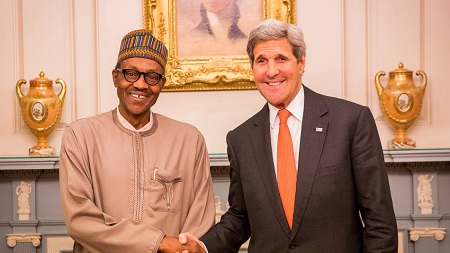
While fielding questions from journalists after a closed door meeting with Nigeria military Service Chiefs at the National Defence College (NDC) in Abuja yesterday, U.S lawmaker, Darrel Issah, disclosed that the United States of America has begun the process of lifting its restriction on the sale of military equipment to Nigeria to fight Boko Haram terrorists.
"There are a number of things that we discussed today. Basically, there was the need for additional technical support, including overhead surveillance. This is important for Boko Haram but it is also important to stop the theft of this country’s oil by pirates and others.
The fact is that this new regime with the new general staff has begun the process of ensuring that military professionalism in all post-civilians and combats has been made in a way that we can both be confident that the rule of law is being obeyed.
So the process has begun to lift the restriction of the Leahy Law. But let’s understand that the vast majority of support that the US provides and would provide would be provided regardless of those. Our technical support, our training and most of the equipment we supply have never stopped and will continue.
But we are looking forward to the President, with the new General Staff to work to make sure the people of Nigeria can have the confidence in the professionalism of the military, something the people rely on when the military is trying to clear insurgents and protect civilians.
That is important to the new President; that is important to our President. So those are some of the areas that we discussed but we are very much looking forward to a great difference in the relationship, a proactive relationship and one in which we can provide a much greater level of support. Many of the items we discussed today are new and enhanced items that would be provided to this government.
The leadership of the military had been showing an understanding that the war against terrorism involved getting the people out of the insurgency and securing the communities as well as creating the environment for them to have trust in the government rather than the Boko Haram.
Boko Haram had not only disrupted the peace of the area, it had also caused famine in the affected communities."
 Home
Home