In Nigeria, some former military officers are making waves in their new positions as royal fathers of their kingdoms. We bring to you the top 5 former military officers who are now sitting as traditional rulers.
Opportunities to serve in the military have not only been associated with rare privileges, discipline and professionalism, but have always created more openings for one to rise to prominence in politics, various institutions and industries outside the military sphere.
In Nigeria, some former military officers are making waves in their new positions as royal fathers. The demand for discipline, perhaps, has a role in people’s choice for retired military officers to sit at the helm of affairs as paramount rulers in their communities since discipline is an essential part of the military.
Some of the former military officers now sitting as traditional rulers include:
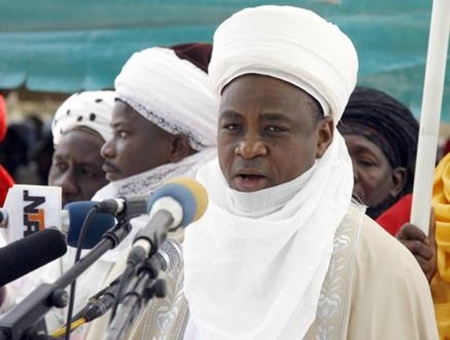
1. Alhaji Muhammad Sa’ad Abubakar, Sultan of Sokoto
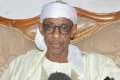
The Sultan of Sokoto, Alhaji Muhammad Sa’ad Abubakar, is the 20th Sultan of Sokoto Caliphate. He was born on August 24, 1956 when his father, Sultan Abubakar Sadiq III was on the throne as the Sultan from 1938 to 1988. However, what people may not know is that before his enthronement, Sultan Sa’ad had sojourned in military service before retirement as a Brigadier General.
During his military career, Sultan Abubakar held several appointments. From 1981 to 1982, he served in 245 Recce Battalion for OAU Peacekeeping Force in Chad Republic. Similarly, from 1987 to 1988, he was Second-in-Command, Corps Headquarters (Presidential Security Unit) and in 1993, assumed Commanding Officer position, 241 Recce Battalion, Kaduna. From 1995 to 1999, he was ECOWAS military liaison officer and Commanding Officer, 231 Tank Battalion (ECOMOG Operations) in the war-shattered Sierra Leone from 1999 to 2000. That was not all. From 2003 to 2006, he served as Defence Attaché to Pakistan and was at the same time, accredited to serve in Iraq, Saudi Arabia, and Afghanistan before his retirement.
After his military career, he became the Sultan of Sokoto on November 2, 2006 following the death of his elder brother, Sultan Muhammad Maccido, in a plane crash involving ADC Airline Flight 53. As the Sultan, he is also the Amir al-Muminin (Commander of the Faithful) and spiritual leader of Muslims in Nigeria. He is also the president-general of Jama’atu Nasril Islam (JNI) and president-general of the Nigerian Supreme Council of Islamic Affairs (NSCIA).
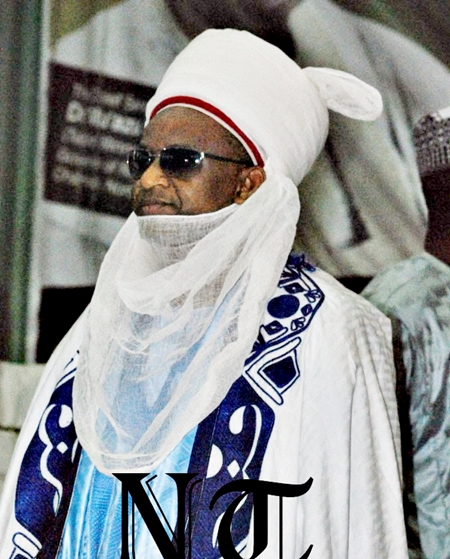
2. Alhaji Mohammed Sani Sami, Emir of Zuru
Alhaji Mohammed Sani Sami, retired from military service as a Major General after a fulfilling and successful career. He joined the army on December 10, 1962. He was saddled with a new responsibility by former head of state, General Murtala Muhammad, who appointed the then young Lt Col Sani Sami as Commander of Brigade Guards.
Following the December 31, 1983 coup which ousted President Shehu Shagari’s government and brought General Muhammadu Buhari to power, Sami was appointed military governor of Bauchi State. He held the office as governor of the state until August, 1985 when General Ibrahim Babangida overthrew the Buhari regime.
Sami pulled out of military service on September 3, 1990. However, another royal crown with its royal feather was waiting for him after he had hung his Khaki military uniform. That was the crown of the throne of Emir of Zuru, Kebbi State. He is the Emir of Zuru, one of the highly respected emirates in northern Nigeria.
3. HRH Alhaji Yahaya Abubakar, Etsu Nupe
Another traditional ruler who took early sojourn in the military circle before rising to royalty as traditional ruler is HRH Alhaji Yahaya Abubakar, the current Etsu Nupe. Born in 1952 in Bida, present-day Niger State, to the family of late Alhaji Abubakar Saganuwa Nakordi Nupe, he grew up as a member of the ruling house of Bida Emirate.
It was after his education in Commercial College, Kano between 1967-1971, that he enrolled into the NDA. During his military career, he held several appointments, including the position of director of foreign operations at the Defence Headquarters, Abuja. This was, however, his last appointment before his retirement in September 2003 at the rank of Brigadier General.
After his service in the army, his community found him deserving to serve in a more exalted seat as the Etsu Nupe. He was, therefore, appointed as the 13th Etsu Nupe on September 11, 2003, a position which places him as the ruler of all Nupe-speaking people. He succeeded his uncle who was the 12th Etsu Nupe, Alhaji Umar Sanda Ndayako following the latter’s death.
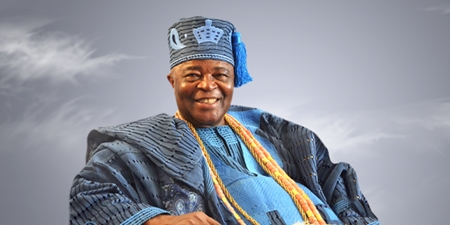
4. HRH Oba Michael Adedotun Aremu Gbadebo III, Alake of Egbaland
Just like his counterparts, His Royal Highness, Oba Michael Adedotun Aremu Gbadebo, the Alake of Egbaland ascended the throne after a successful military career. He retired from the army as a colonel. He went to University of Ibadan in 1965 where he obtained a Bachelor of Arts degree in 1969. He joined the army the same year.
During his career in the army, Gbadebo attended Command and Staff College (CSC), as it was called then, Jaji. From January, 1984 to September, 1985, he served as principal staff officer to Major General Tunde Idiagbon who was then the Chief of Staff, Supreme Headquarters, Dodan Barracks.
After his military service, Gbadebo’s community desired his service at home. He was therefore, installed as the Alake of Egbaland following the death of Oba Oyebade Lipede. He was enthroned as Alake, six months after the death of Lipede on February 3, 2005. Gbadebo was voted by 15 out of 23 Egba kingmakers who had assembled to elect a ruler for the throne. He therefore, became the Alake of Egbaland on August 2, 2005.
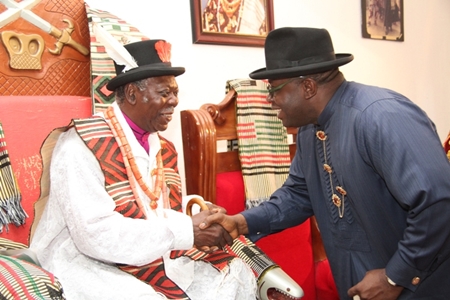
5. HRM Capt Alfred Diete-Spiff, King of Brass
The present King (Amayanabo) of Twon-Brass of Bayelsa State, His Royal Majesty Alfred Diete-Spiff, cannot be forgotten when military officers who have traversed from military service to royalty are being discussed. His journey into the naval service (Merchant Navy) started in 1961. He had a good performance record there which prompted the Nigerian Navy to demand that he be transferred to it in 1962 for further training. He retired as a Navy Captain.
As he towered in his military career, Diete-Spiff later became the first military governor of Rivers State after it was created out of the defunct Eastern Region. As the governor of the then new state, he held office from May 28, 1967 to July, 1975 during the era of General Yakubu Gowon-led military junta. Diete-Spiff became governor at the age of 25 when he was a Naval Lieutenant Commander.
Just like Diete-Spiff, his father, was a notable civil servant who worked as a postmaster and later became the traditional ruler of the Amangi people. In his case, Diete-Spiff became king of Brass in 1966.
 Home
Home