The governor of the commercial capital of Nigeria, Lagos has released staggering figures about the volume of rice and cattle consumed by Lagosians in a year.
Governor Akinwunmi Ambode
Lagos State consumes N135 billion worth of rice and 2.19 million herds of cattle annually, says Governor Akinwunmi Ambode according to P.M news.
The governor who disclosed this at the State House, Ikeja, Lagos, on the occasion of the signing of Memorandum of Understanding between Lagos and Kebbi State on the development of Commodity Value Chains, said the future of Lagos State was partly tied to deliberate resolution on food security.
He said food production and self-sufficiency required its immediate attention at policy and strategic levels to sustain the state, adding that Lagos State is the largest consumer of food commodities in Nigeria by virtue of its population.
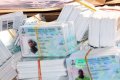
“We have the market, with the required purchasing power also. Lagos State has an estimated consumption of over 798,000 metric tonnes of milled rice per year which is equivalent to 15.96 million of 50kg bags, with a value of N135 billion per annum.
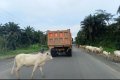
“We have the economic prowess to produce rice locally. The era of imported rice is gone. The reality is for all of us to embrace the consumption of local foodstuff and commodities. In addition to rice, Lagos is currently consuming 6,000 herds of cattle daily which may increase to 8,000 in the next five years,” he said.
According to Ambode, the bulk of the vegetables produced in the country end up in the Lagos markets as the state is one of the largest producers of poultry and thus had a large demand for maize for livestock feed production.
“The state also houses most of the industrial users of wheat and sorghum; mostly flour mills, bakeries, breweries and food manufacturers. Kebbi State, on the other hand, is blessed with a vast arable land suitable for the cultivation of rice, wheat, groundnut, maize, sorghum and sugar cane.
“It is an agrarian State with over 1.2 million hectares of arable land characterised by very large floodplains, lowland swamps and gentle slopes. In the 2014/2015 wet season, over 600,000 hectares of land was deployed for rice cultivation in the three senatorial areas of the state," he said.
 Home
Home