Home Contact Us Tip Us: [email protected]







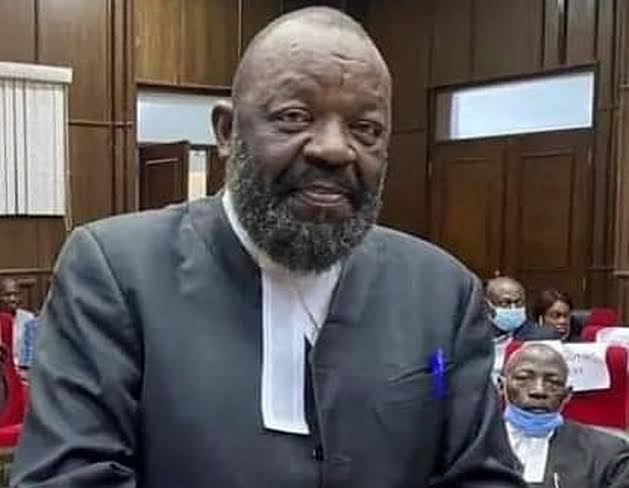
(Barrister Aloy Ejimakor. Photo Credit: The Street Journal)
Human rights lawyer, Barrister Aloy Ejimakor, has condemned what he described as growing "Afrophobia" and xenophobic att@cks against other African nationals in South Africa, accusing sections of the country's population of betraying the solidarity that helped end apartheid.
Ejimakor, in a statement shared on his social media account, appealed directly to Black South Africans, particularly members of the Zulu ethnic group, to end att@cks on fellow Africans, warning that the violence has damaged South Africa's reputation across the continent.
He addressed Black South Africans, describing their Afrophobia against fellow Black people as shameful.
Recalling Africa's role in the struggle against apartheid, Ejimakor said South Africa benefited immensely from the sacrifices of other African nations, including Nigeria, Zimbabwe, Zambia and Tanzania.
He urged South Africans to remember, before raising a hand against another Black African resident, that South Africa was the only country in the world for which the whole of Black Africa banded together to help free from oppression under apartheid.
He added that no other country enjoyed such solidarity, noting that Nelson Mandela lived in Nigeria, as did Thabo Mbeki for many years, both at Nigeria's expense, with Nigeria also providing millions of dollars and nationalising British corporations within its territory because of the anti-apartheid cause.
Ejimakor further noted that other Southern African countries paid an even greater price during the anti-apartheid struggle, stating that Zimbabwe, Zambia, Tanzania and other frontline states paid in the blood of their men who fought and d!ed for South Africa's liberation.
The lawyer argued that the recent att@cks on foreign Africans have attracted international condemnation and left many Africans questioning the sacrifices made to secure South Africa's liberation.
He said the unchecked Black-on-Black violence currently being directed at foreign Blacks has brought global ridicule and triggered a form of buyer's remorse among African nations that once came to South Africa's aid and sacrificed greatly to free it from apartheid.
Ejimakor also warned that the att@cks were reinforcing negative stereotypes historically used to justify racial oppression, suggesting that such behaviour gives the White minority some cold comfort in believing they may have been right to view Black South Africans as savages, before asking rhetorically whether that perception was true.
Describing xenophobic violence as unacceptable, he added that anyone who believes hating other Black people is the key to survival and prosperity should feel sorry for themselves, describing such behaviour as un-Black, inhuman, and bordering on savagery.
Calling for an immediate end to the att@cks, Ejimakor warned that continued violence could provoke diplomatic consequences, urging South Africans to cease their xenophobia before it reaches a point where foreign Blacks and their governments turn against them.
The lawyer also called on South African President Cyril Ramaphosa to intervene decisively, stating that the rest of Black Africa is watching to see how quickly his government would rise to the occasion and stop what he described as an abomination, adding that responsibility ultimately rests with the president.
Ejimakor further urged Nigerian President Bola Tinubu to adopt a tougher diplomatic stance toward South Africa over att@cks on Nigerians, calling on him to issue the strongest possible warning to the South African government that there would be serious consequences for any Nigerian life lost to a South African mob.
His remarks come amid renewed anti-immigrant protests and att@cks against foreign nationals in parts of South Africa, with Nigerians and other African migrants among those expressing fears over their safety.