A woman has recounted the incredible experience she had to go through after she was diagnosed with a rare blood disorder.
Stephanie D'Ovidio
Stephanie D'Ovidio, a 28-year-old young woman, was diagnosed with an extremely rare blood disorder and two potentially fatal placenta conditions.
The young woman has revealed she was 'terrified she would not survive' after she was rushed into surgery during her second pregnancy.
Ms D'Ovidio, from Perth, was confined to her bed in 2013 while pregnant with daughter Sienna and said the mixture of conditions meant her body was a 'ticking time bomb' that could explode.
Ms D'Ovidio began violently haemorrhaging one night and although baby Sienna was not due for several weeks, doctors were forced to deliver the infant early.
The young mother was lucky to survive the five-hour surgery and lost a shocking eight litres of blood, receiving donor blood from the Red Cross.
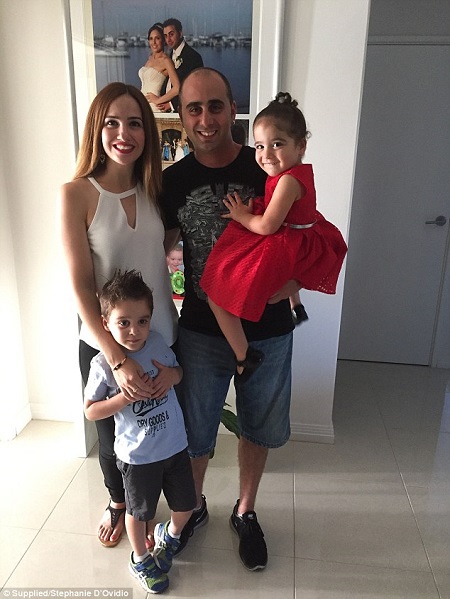
Ms D'Ovidio with her family
The West Australian quotes Ms D'Ovidio as saying 'Processing this information was awful, I had a 13-month-old son at home who needed me but I couldn't be there for him.'
Along with the rare blood disorder ITP, Ms D'Ovidio was diagnosed with Major Placenta Previa and Placenta Accreta during the late stages of her pregnancy.
Surgeons were forced to perform a hysterectomy during the emergency surgery which took five hours. She spent a further two months in hospital to regain her strength and now hopes to inspire others to donate blood.
Speaking with Daily Mail Australia, she said: 'I have way too much gratitude for the opportunity to still be here thanks to the donors and the doctors and nurses at King Edward Memorial Hospital. I have the opportunity to be with my family and friends and to contribute to others because my life was saved. I feel as if though it's my mission to give back more then I received.'
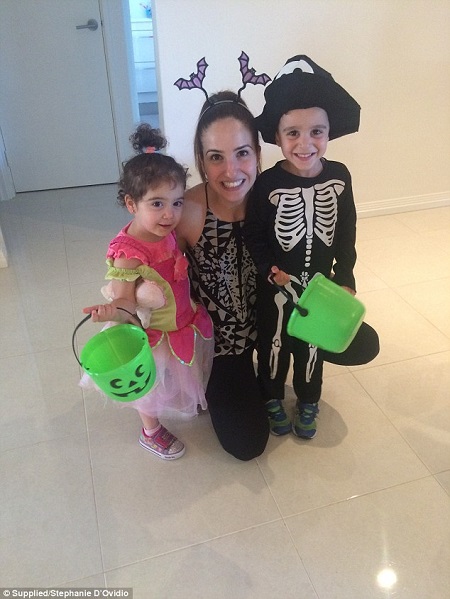
D'Ovidio and her kids
Major Placenta Previa develops during pregnancy when the placenta covers the cervix, meaning the baby cannot be born vaginally. Major haemorrhaging, fetal distress, early labour and shock are some of the possible complications and the condition affects one in every 200 pregnancies.
Similarly, Placenta Accreta occurs when the placenta attaches to the uterine wall and greatly increases the chance of dangerous bleeding during labour
Ms D'Ovidio also suffered from the rare autoimmune disorder idiopathic thrombocytopenic purpura, meaning her blood was unable to clot properly.
 Home
Home