Home Contact Us Tip Us: [email protected]



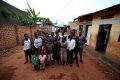



(NDDC. Photo Credit: Punch News)
In order to assist reduce avoidable deaths among women and newborns, the Niger Delta Development Commission has renewed its commitment to supporting the Federal Government's Maternal and Neonatal Mortality Reduction Innovation Initiative by providing training to traditional birth attendants.
At a workshop for traditional birth attendants in the states of Delta and Bayelsa, where participants received training on safe maternity and newborn care, the commission made the vow.
This was contained in a statement issued on Wednesday in Port Harcourt by the NDDC Director of Corporate Affairs, Seledi Thompson-Wakama.
Speaking at the workshop, the Managing Director of the NDDC, Dr. Samuel Ogbuku, urged women to combine traditional birth practices with orthodox medical care in order to improve maternal and child health outcomes.
Ogbuku, represented by the Principal Manager, Education, Health and Social Services, Mrs. Dare-Oloko Kuami, described the rate of maternal and child deaths as alarming and unacceptable, stressing that the training was meant to enlighten women and should not be taken for granted.
According to him, the workshop was designed to equip traditional birth attendants with the knowledge and skills required for safe maternal and newborn care, early detection of pregnancy-related complications, and prompt referral of high-risk cases to health facilities.
Also speaking, the Director of Education, Health and Social Services at the NDDC, Dr. Patience Ezugu, represented by the Principal Manager, EHSS, Dr. Otokolo Fidelis, encouraged women to take childbirth issues seriously and acquire the knowledge needed to support mothers within their communities. She disclosed that more than 300 women from Delta and Bayelsa states participated in the programme and received medical equipment as well as cash support.
One of the resource persons, Mrs. Gift Akitiri, highlighted the important role traditional birth attendants play in rural communities, stressing the need for continuous capacity building, noting that since they are trusted members of many communities, equipping them with updated knowledge helps ensure that mothers and newborns receive timely, appropriate care, ultimately improving health outcomes.
One of the participants, Mrs. Franscica Odiakosa, commended the commission for organising the training, saying it had deepened her understanding of maternal healthcare and referral procedures, noting that she had gained valuable knowledge that would enhance the quality of care she provides to her community, including knowing when to refer mothers to health centres and hospitals in situations she cannot handle.
The workshop forms part of the NDDC's ongoing efforts to strengthen maternal and child healthcare services in the Niger Delta through improved collaboration between traditional birth attendants and the formal healthcare system.