Home Contact Us Tip Us: [email protected]



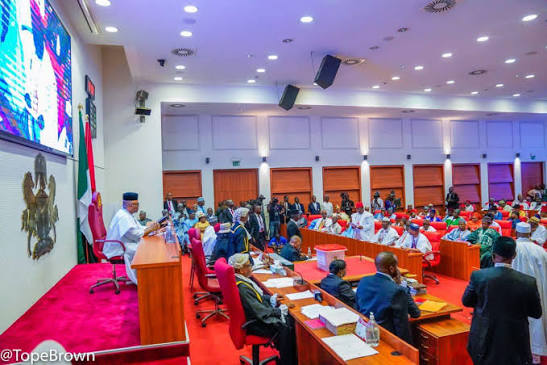
(Senate. Photo by FB/Nigeria Senate)
The Nigerian Senate is discussing a new law to stop hospitals from rejecting or delaying emergency patients.
If this law passes, any hospital or health worker that refuses to treat an emergency patient will face a ₦300,000 fine, up to 6 months in jail, or both.
The bill would require public and private hospitals to check emergency patients within 15 minutes of arrival.
Staff must start basic treatment within 30 minutes.
If a patient needs to be moved to another facility, the referral must be completed within three hours.
Senator Abdulaziz Yar'Adua sponsored the bill.
It seeks to change the National Health Act 2014 by setting clear rules for emergency treatment, staff training and patient referrals.
Yar'Adua led the debate at Wednesday's plenary session.
He said the change would fix serious gaps in the health system and make sure every patient gets timely, life saving care, no matter their wealth, status or location.
Under the bill, the Medical and Dental Council of Nigeria and the Nursing and Midwifery Council of Nigeria would design one national emergency care training programme together.
Health workers involved in emergency care would have to take the training and get certified at least every 18 months.
Triage, which is the first check to decide who needs urgent care, must begin within 15 minutes.
A trained and certified nurse can carry out triage if no doctor is available.
Basic stabilisation must start within 30 minutes of arrival.
This includes oxygen, intravenous fluids, pain relief and early tests.
Patients whose lives are at risk must get urgent help straight away, such as CPR, airway support and bleeding control.
If a patient needs a bed, the hospital must assign one within two hours, if one is available.
Hospitals without free beds must still stabilise the patient and start referral arrangements within two hours of arrival, or as soon as the patient is stable enough to move.
Ambulance dispatch or other transport must be arranged within 30 minutes of the decision to refer.
Yar'Adua said the proposal follows international practice.
He pointed to countries like Ghana, South Africa, Kenya, the United Kingdom and the United States.
Senate Whip Mohammed Monguno of the APC, representing Borno North, backed the bill.
He said it would help prevent avoidable deaths from road crashes and maternal emergencies.
He criticised some health providers for neglecting emergency patients, which he said leads to deaths that could have been prevented.
He added that the law would make violations of emergency treatment standards a criminal offence.