Home Contact Us Tip Us: [email protected]







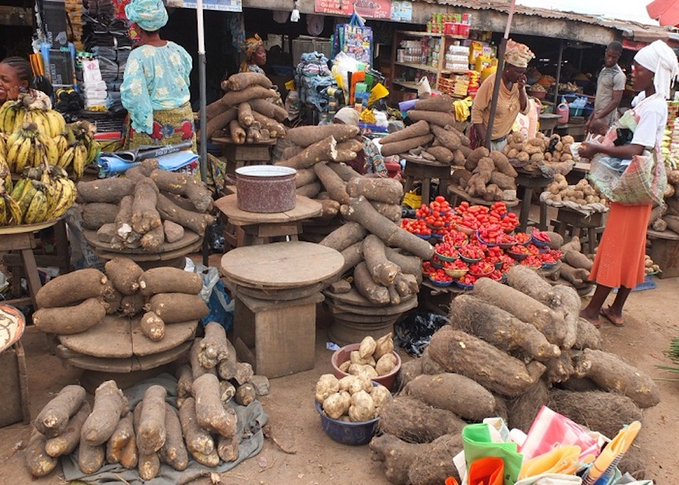
(Food items in an open market. Photo Credit: Premuim Times)
Although access to nutritious meals has improved recently, the World Health Organization (WHO) has cautioned that almost 2.7 billion people globally still cannot afford the minimal diet required for optimum health.
Tedros Ghebreyesus, the director-general of the World Health Organization, stated in a video that was uploaded online, on Tuesday that although more than 200 million more people were able to afford a healthy diet last year compared to 2021, the development is still insufficient.
According to Mr. Ghebreyesus, the burden is not evenly distributed, with Africa being disproportionately impacted because almost two-thirds of the continent's population cannot afford a nutritious food.
Africa Bears Heaviest Burden
Ghebreyesus said Africa remains the region most affected by the high cost of nutritious food, with about two-thirds of its population unable to afford a healthy diet.
He warned that the situation is even more difficult in some of the world's most vulnerable settings, where conflict, displacement and climate change are driving unprecedented levels of acute malnutrition, particularly among children.
According to him, while the WHO is supporting countries in responding to the immediate nutrition crisis, governments must also tackle the underlying factors that make healthy diets inaccessible, stressing the need to act upstream given what is already known to work.
Policy Actions
Ghebreyesus outlined several measures governments can adopt to improve access to healthy diets.
These include promoting breastfeeding, taxing unhealthy foods and drinks while subsidising healthier alternatives, protecting children from the marketing of unhealthy industrially produced foods and beverages, introducing clear front-of-pack nutrition labelling to guide consumer choices.
Reformulating food products to reduce salt, sugar and trans fats, and strengthening primary healthcare systems to prevent, detect and manage all forms of malnutrition.
He said implementing these interventions would make healthy diets more available, affordable and accessible to everyone, stressing that healthy diets should not be a luxury but the foundation of health, within everyone's reach.
Nigeria's Context
The WHO warning reflects Nigeria's growing struggle with the affordability of nutritious foods, as rising food prices, with common protein sources often costing thousands of naira per unit, continue to limit access to balanced diets for many households.
A balanced diet typically includes carbohydrates, proteins, healthy fats, fruits and vegetables, providing the nutrients needed for healthy growth, development and disease prevention.
According to the National Bureau of Statistics, although food inflation has slowed in recent months, many nutrient-rich foods, including vegetables, fruits, eggs, fish and other protein sources, remain beyond the reach of low-income families.
This challenge has contributed to Nigeria's persistent malnutrition burden.
Findings from the Nigeria Demographic and Health Survey 2023–24 show that about 40 per cent of children under five are stunted, while eight per cent are wasted, highlighting the continued impact of poor nutrition on child health.
The affordability crisis is further compounded by insecurity in several parts of the country, where conflict continues to disrupt food production, livelihoods and access to healthcare, with armed conflict and displacement, particularly in the North-east, worsening hunger and malnutrition by forcing families from their homes, limiting access to farmland and disrupting humanitarian assistance in affected communities.