Home Contact Us Tip Us: [email protected]






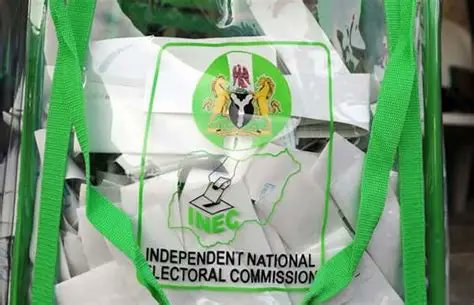
(INE. Photo credit: Panac News)
Nearly 150 candidates running for president and governor in 2027 could collectively spend up to N571 billion under new election spending limits.
Nineteen presidential candidates each have a spending ceiling of N10 billion, giving them a combined limit of N190 billion.
At the state level, 127 governorship candidates are each allowed to spend a maximum of N3 billion, for a total of N381 billion across all of them.
These figures represent the maximum money candidates can lawfully spend if they hit the limit, though it doesn't mean all that money will actually be spent.
The electoral commission has published details of the 19 presidential candidates as campaigns officially kick off.
According to election tracking, 127 candidates across 28 states are competing for governor in 2027.
The main parties dominating the race are the APC and PDP, each with 28 candidates, followed by the ADC with 21.
The new spending caps mark a major increase from previous limits. A presidential candidate can now spend up to N10 billion versus a governorship candidate's N3 billion cap.
Senate candidates are limited to N500 million and House members to N250 million.
The law also restricts individual donations to N500 million per candidate, meaning a single donor can't give more than that to one candidate.
Candidates who knowingly exceed the limits face fines equal to one percent of their permitted spending, or up to 12 months in jail, or both.
Concern Over Enforcement
Experts warn that spending limits only work if they're enforced.
Civil society groups say the real challenge is getting political parties and candidates to actually follow the rules.
One analyst said the major issue isn't that the limits exist, but whether electoral authorities and politicians will comply.
If ruling party members don't follow the law, it becomes hard for the electoral commission to act against opposition parties.
Media outlets and civil society groups will need to monitor campaign spending and expose violations, experts say.
The electoral commission can't do it alone.
Advocates called for stronger enforcement, better tracking systems and tougher penalties, including possibly banning politicians who cheat on spending limits from running in future elections.
Broadcasters Warned on Election Coverage
Nigeria's broadcast regulator has warned media outlets to avoid spreading misinformation and inflammatory content during the campaign period.
Broadcasters, online publishers and bloggers must ensure fair, balanced and accurate political coverage without promoting or suppressing particular candidates or parties.
Unverified claims and allegations should not be presented as facts without proof.
The regulator warned against using broadcast and social media to spread divisive content that could incite violence or deepen ethnic or religious tensions.
Election results should only come from official sources, not speculation or unofficial exit polls.
Media outlets must keep records of political airtime given to each party and candidate and must clearly separate political advertising from news.