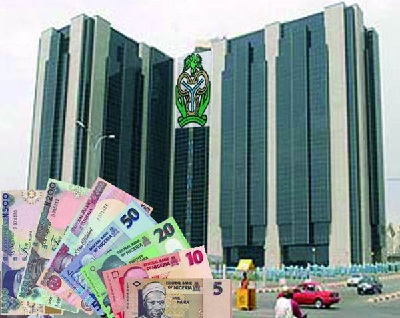
CBN has ordered banks to refund charges made on customers for daily cash withdrawal or deposits exceeding set limit in the 30 states.
While briefing newsmen after the 322 Bankers’ Committee Meeting in Lagos over the weekend, Mr. Kolawole Balogun, who represented the Director Banking Supervision Department of the CBN, disclosed that the Central Bank of Nigeria (CBN) has ordered banks in the country to refund charges made on customers for daily cash withdrawal or deposits exceeding set limit in the 30 states that full cashless policy transactions has not taken place.
The CBN disclosed that the new policy on cash-based transactions has not officially taken place in all the states of the country. Tokunbo Martins who represented CBN said;
“At the meeting we agreed that banks should refund the charges made on customers for withdrawal and deposits in those states that cashless policy has not taken place.
The cashless policy has officially taken place in five states and federal capital, Abuja. The states are Lagos, Abia, Anambra, Kano, Ogun and Rivers States, as well as the Federal Capital Territory, Abuja. The CBN has not officially announced the take off implementation of full cashless policy in other states other than the already stated states and federal capital territory, Abuja, due to some infrastructure bottlenecks.
We are allowing ample time for the banks to deploy adequate infrastructure needed to support the cashless policy as well as enable additional sensitization of various bank customers on the merits of the policy. There are telecommunication, power and other problems that are yet to be addressed.”
The CBN has introduced a new policy on cash-based transactions which stipulates a ‘cash handling charge’ on daily cash withdrawals or cash deposits that exceed N150,000 for Individuals and N1,000,000 for corporate bodies.
The new policy on cash-based transactions (withdrawals & deposits) in banks, aims at reducing (not eliminating) the amount of physical cash (coins and notes) circulating in the economy, and encouraging more electronic-based transactions (payments for goods, services, transfers, etc.).
 Home
Home