Home Contact Us Tip Us: [email protected]







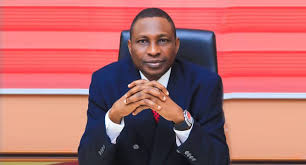
(EFCC Chairman, Ola Olukoyede. Photo by Channels TV)
The Executive Chairman of the Economic and Financial Crimes Commission (EFCC), Ola Olukoyede, has said that some governorship aspirants in Nigeria spent between ₦20 billion and ₦30 billion to secure electoral victory during the last primary elections, warning that the trend poses a serious threat to democratic governance and fuels corruption in public office.
While delivering the inaugural High-Level Guest Speakers' Series organised by the Centre for Peace and Strategic Studies (CPSS), University of Ilorin, on Wednesday, the EFCC boss said the huge financial resources deployed during elections often compel elected officials to divert public funds after assuming office in a bid to recover their investments.
He spoke on the theme, "De-risking and Mobilising Critical Stakeholders for Peaceful and Credible 2027 Elections in Nigeria."
Olukoyede noted that the EFCC remains committed to tackling vote-buying and other forms of financial inducement capable of undermining the integrity of Nigeria's electoral process.
"The commercialisation of votes weakens the foundation of good governance because it compromises the political recruitment process.
Leaders who buy their way into office are more likely to focus on recovering their investments rather than serving the public interest," he said.
He revealed that the anti-graft agency had made several arrests across the country over vote-buying and related electoral offences, with several convictions already secured.
Those prosecuted include politicians, electoral officials and ordinary citizens found culpable of electoral misconduct.
The EFCC chairman warned that impunity in the electoral process could undermine democracy and national stability, stressing that there must be no sacred cows in enforcing electoral laws.
He also disclosed that the commission plans to deploy drones and other technological tools to strengthen election monitoring ahead of the 2027 general elections, particularly in tracking vote-buying and financial inducements at polling units.
Olukoyede called on political parties and their supporters to embrace issue-based campaigns and reject inflammatory rhetoric capable of inciting violence.
He urged stakeholders, including the Independent National Electoral Commission (INEC), security agencies, civil society organisations, the media and political actors, to work collaboratively to ensure peaceful, free and credible elections.
Earlier, the Vice-Chancellor of the University of Ilorin, Professor Wahab Egbewole (SAN), described electoral corruption as a major threat to national security and democratic development, stressing the need for stronger collaboration between academic institutions and agencies responsible for safeguarding electoral integrity.
In his welcome address, the Director of the Centre for Peace and Strategic Studies, Professor G.A. Animasawun, said the lecture series was conceived to provide a platform for proactive engagement on threats to Nigeria's electoral process ahead of the 2027 polls, bringing together policymakers, security experts, electoral officials, civil society groups and scholars to develop practical solutions for peaceful and credible elections.
The event attracted representatives of security agencies, electoral bodies, civil society organisations, members of the academic community and students.